
Summary:
You’re not here because you haven’t tried anything. You’re here because what you’ve tried hasn’t been enough. Maybe medication left you feeling flat. Maybe therapy has a three-month wait. Maybe you’ve worked through half the supplement aisle — magnesium, ashwagandha, CBD — and still wake up at 3 a.m. with your mind running.
That’s a specific kind of frustration, and it’s more common in Nassau County, NY than most people realize. The good news is that acupuncture, Chinese herbal medicine, and Traditional Chinese Medicine as a combined system offer something meaningfully different. This page explains exactly how each one works, how they compare, and what the evidence actually says.
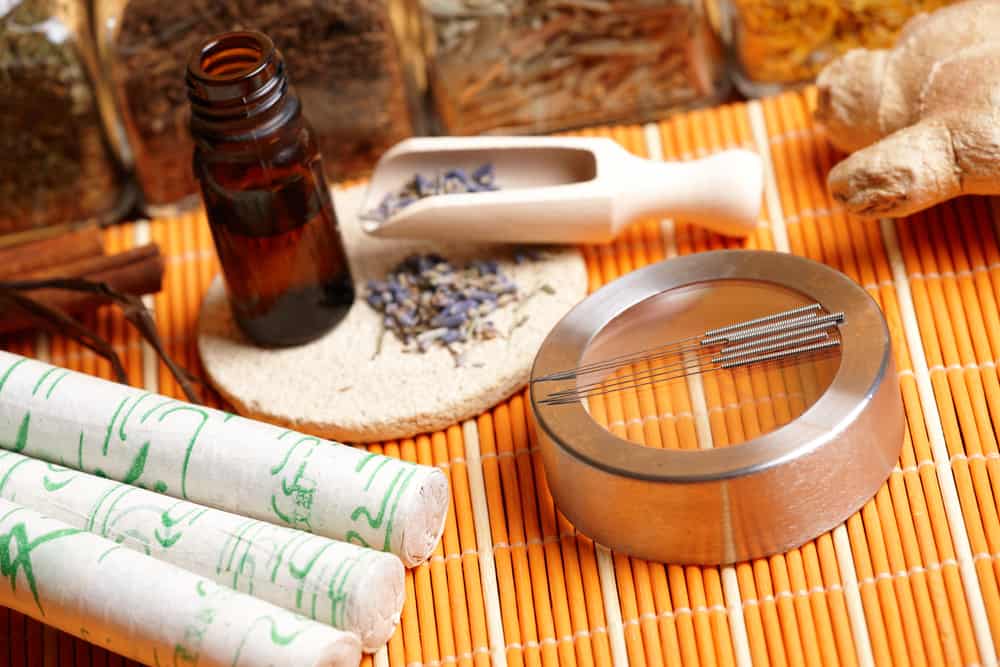
Herbal Anxiety Relief: What Chinese Herbal Medicine Actually Does
Chinese herbal medicine isn’t the same as picking up a supplement at a drugstore. When a practitioner who’s board-certified in herbology prescribes a formula, they’re working from a clinical assessment of your specific pattern — your sleep quality, your digestion, your pulse, your tongue, how your anxiety actually shows up in your body. The formula is built around you, not around a general “stress support” label.
That distinction matters more than it might sound. A formula like Xiao Yao San, traditionally used for anxiety rooted in what TCM calls Liver Qi stagnation, works differently than a formula designed for anxiety tied to sleep disruption or heart palpitations. The herbs target your pattern, not a generic symptom category.
Because herbal medicine is taken daily — not just during appointments — it provides continuous support between sessions in a way that acupuncture alone cannot. This sustained approach is what makes it such a powerful complement to needle-based treatment.
Are Chinese Herbs Safe to Take With Anxiety Medication?
This is the question most people don’t ask out loud but almost everyone is thinking. If you’re already on an SSRI, a benzodiazepine, or any other prescription, the idea of adding herbal medicine raises a legitimate concern — and it’s one that deserves a straight answer rather than a vague reassurance.
The honest answer is: it depends on the herbs, the dosage, and what you’re currently taking. Some herbs do interact with conventional medications, and that’s exactly why the training of your practitioner matters so much. At Think Acupuncture, our practitioners are specifically trained to identify potential interactions between Chinese herbs and conventional medications. This isn’t a side note in our intake process — it’s a core part of how we evaluate every patient before recommending any herbal protocol.
For patients who are already working with a physician or psychiatrist, we don’t ask you to choose between your current care and ours. We collaborate with your existing providers. That means your treatment plan accounts for everything you’re already taking, and nothing is prescribed in isolation from your broader health picture.
Studies show that herbal treatments carry a lower incidence of side effects compared to conventional antidepressants — which is meaningful for patients who’ve experienced emotional blunting, weight changes, or dependency concerns with pharmaceutical approaches. That doesn’t make herbal medicine risk-free, but it does make it a genuinely viable option for long-term support when it’s prescribed by someone qualified to do it safely.
If needle hesitation has kept you from exploring TCM before, herbal medicine is also worth knowing about as a standalone option. While it’s most effective in combination with acupuncture, it can be a meaningful starting point for patients who aren’t ready for needles. Our practitioners can assess whether that’s the right fit for you during a free initial consultation.
How Does Herbal Medicine Compare to Acupuncture for Anxiety?
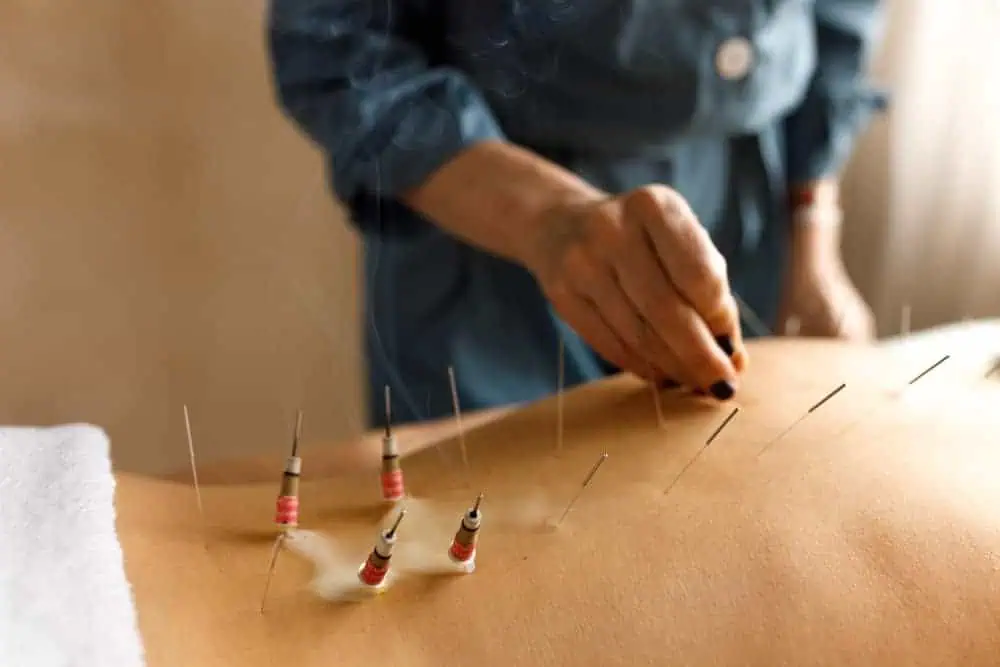
Think of it this way: acupuncture works in sessions, herbal medicine works continuously. They address anxiety through different mechanisms, and for most patients, the combination produces more durable results than either approach alone.
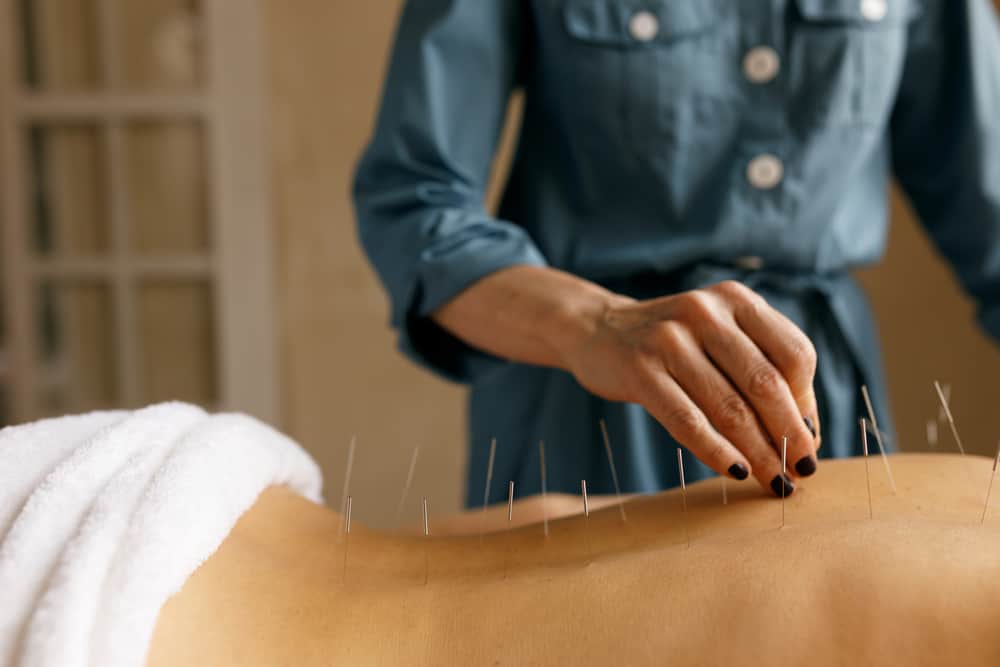
Acupuncture works by influencing the nervous system directly. Research has documented measurable changes in the limbic system and prefrontal cortex — the brain regions involved in regulating emotion and stress response — as well as reductions in cortisol, the primary stress hormone. Multiple peer-reviewed systematic reviews and meta-analyses, including a 2023 review published in a major neurology journal, confirm acupuncture’s efficacy for anxiety through randomized controlled trials. The World Health Organization and the National Institutes of Health both formally recognize acupuncture’s effectiveness for stress and anxiety-related conditions.
Herbal medicine operates on a slower, more sustained timeline. Where acupuncture can produce noticeable calming effects during and immediately after a session, herbal formulas build their effect over days and weeks, gradually shifting the underlying patterns that drive chronic anxiety. Herbs like Suan Zao Ren (Ziziphus seed) are used specifically for anxiety accompanied by sleep disruption — one of the most common complaints we hear from patients in Nassau County, NY who are managing long commutes and insufficient rest.
The practical takeaway is this: if you’re comparing acupuncture and herbal medicine as if you have to pick one, you’re working with a false choice. TCM is a system, and the full system — acupuncture sessions combined with a personalized herbal protocol and, where relevant, dietary guidance — is designed to address anxiety at the root rather than manage it session by session. That’s the approach we take at Think Acupuncture, and it’s what separates a genuine TCM practice from a clinic that simply offers needles.
Natural Pain Relief and Anxiety: Why TCM Treats Both at Once
Anxiety and chronic pain share more than a waiting room. They frequently co-occur, reinforce each other, and respond to the same root-cause patterns in TCM. If your anxiety shows up alongside tension headaches, neck stiffness, digestive discomfort, or disrupted sleep, that’s not coincidence — and it’s not something a single-symptom approach is going to resolve.
This is one of the more practical advantages of TCM as a system. When we assess a new patient, we’re not just looking at the anxiety in isolation. We’re looking at the full picture, and natural pain management is often part of the same treatment plan. Patients frequently report improvements in sleep, digestion, and physical tension alongside the anxiety relief they came in for — because those things are connected in TCM’s framework, and treating one often shifts the others.
Natural Pain Management With Acupuncture: What the Research Shows
Acupuncture’s evidence base for pain is actually stronger and longer-established than its evidence base for anxiety — which is saying something, given how well-documented the anxiety research has become. For conditions like chronic back pain, neck tension, headaches, and joint pain, acupuncture is recognized by both the NIH and WHO as an effective intervention. This is a licensed profession in New York State that has been regulated since 1991.
For patients dealing with anxiety-driven physical tension — the kind that lives in your shoulders, your jaw, your lower back — acupuncture addresses the physical manifestation and the neurological driver at the same time. A session that targets acupuncture points associated with stress regulation isn’t just calming your nervous system; it’s also releasing the muscular tension that anxiety produces in the body. Patients often describe leaving a session feeling physically lighter, not just mentally quieter.
From a natural pain management standpoint, the TCM approach is also notable for what it doesn’t involve. There’s no dependency risk, no tolerance buildup, and no interaction concern with most common pain medications when treatment is managed by a qualified practitioner. For Nassau County, NY residents who are already managing one or more chronic conditions and don’t want to add another pharmaceutical layer, that’s a meaningful practical advantage. Our practitioners assess the full picture — what you’re taking, what you’re feeling, and what your body’s patterns suggest — before building a treatment plan that addresses both the pain and the anxiety driving it.
Nassau County's Mental Health Access Gap — and Why It Matters for Natural Relief
Getting a psychiatry or therapy appointment in Nassau County, NY can take months. That’s not an exaggeration — it’s a documented reality across Long Island, and it’s one reason the 2023 Long Island Health Collaborative analysis found that mental health, depression, and suicide had become Nassau County residents’ single greatest community health concern, displacing cancer at the top of the list for the first time.
That gap is real, and it has consequences. When you’re dealing with anxiety that’s affecting your sleep, your work, your relationships, and your ability to get through a commute that might already be eating two or three hours of your day, waiting three months for an initial appointment isn’t a plan. It’s a holding pattern.
TCM doesn’t replace conventional mental health care, and we’re not suggesting it should. But for patients who need support now — not in a quarter — acupuncture and herbal medicine offer an accessible, evidence-backed option that can start producing results within a few sessions. Many of our patients come to us while they’re on a waiting list for a therapist or psychiatrist, and they find that TCM helps them manage the day-to-day load while they wait for that appointment to come through.
We also accept NYSHIP, United Healthcare, Aetna, and Empire BCBS — which is directly relevant for Nassau County’s large public-sector workforce, including teachers, government employees, and healthcare workers who carry NYSHIP coverage. Insurance acceptance changes the calculation for a lot of people who assumed this kind of care would come entirely out of pocket. For patients who aren’t sure whether TCM is the right fit, we offer a free initial consultation — no financial commitment, no pressure, just a real conversation about what you’re dealing with and whether we can help.
Which Natural Anxiety Treatment Is Right for You?
Acupuncture, herbal medicine, and TCM as a full system each offer something real for anxiety — but they’re not interchangeable, and the right answer depends on your specific pattern, your current medications, your schedule, and how your anxiety actually shows up in your life. That’s a conversation worth having with someone qualified to assess all of it.
What we can tell you is that the combination approach — acupuncture sessions alongside a personalized herbal protocol, with dietary and lifestyle guidance where relevant — consistently produces more durable results than either option alone. For Nassau County, NY residents who’ve already spent time on pharmaceutical approaches that didn’t fully deliver, it’s worth knowing that a clinically rigorous, individually tailored alternative exists close to home.
If you’re ready to stop managing symptoms and start addressing what’s actually driving the anxiety, Think Acupuncture is a good place to start that conversation.