
Summary:
If you’ve been living with chronic pain — whether it’s your lower back, a stiff neck from years of commuting, or joints that ache through every Long Island winter — you’ve probably wondered if there’s a better option than pills that wear off and leave you right back where you started. Here’s something most people don’t know: your body already produces its own pain-killing chemicals. They’re real, they’re measurable, and they work on the same receptors as prescription opioids — without the risks. Understanding how that system works is the first step toward using it. Let’s get into it.
What Are the Natural Pain Killers in Your Body?
The short answer is endorphins — but that’s only part of the picture. Your body produces a family of natural pain-killing chemicals called endogenous opioids, which includes beta-endorphins, enkephalins, and dynorphins. These are neuropeptides, meaning they’re produced by your nervous system and act as chemical messengers that reduce pain signals before they reach your brain.
They bind to the same opioid receptors targeted by prescription pain medications. The critical difference is that your body produces them naturally, in response to specific triggers, and without the addiction risk, respiratory depression, or dependency that comes with pharmaceutical opioids. That distinction matters enormously — especially in Nassau County, where the opioid crisis has left few families untouched.
What Triggers Endorphin Release in the Body?
Your body doesn’t release endorphins randomly — it releases them in response to specific physical and neurological signals. Vigorous exercise is the most well-known trigger, which is where the phrase “runner’s high” comes from. But the list goes further than most people expect: laughter, social connection, certain foods, and even the anticipation of relief can prompt the nervous system to release these natural pain killers.
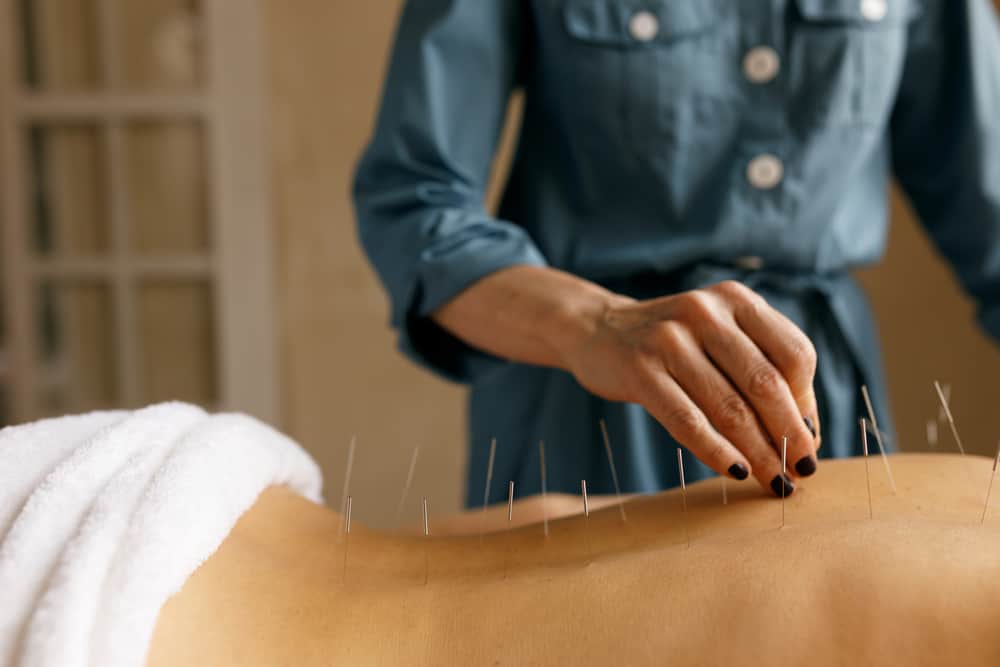
Physical stimulation of specific nerve pathways is another powerful trigger — and this is where acupuncture enters the picture in a meaningful way. When an acupuncture needle is inserted at a specific point on the body, your nervous system interprets that as a micro-signal requiring a response. What follows is a measurable neurochemical cascade: beta-endorphins are released, opioid receptors are activated, and pain perception decreases. Neuroimaging studies using PET scans have documented objective increases in endorphin activity in the brain following acupuncture treatment — changes that show up on imaging, not just in how patients report feeling.
Beyond endorphins, acupuncture also stimulates the release of serotonin, dopamine, and norepinephrine. These are the neurotransmitters involved in mood regulation, stress response, and how your brain processes pain signals over time. So while the immediate effect is pain relief, the broader effect is a recalibration of how your nervous system responds to pain — which is why patients with chronic conditions often notice that their pain doesn’t just decrease during a session, it stays lower between sessions as treatment progresses.
For Nassau County residents who’ve spent years managing pain with NSAIDs or stronger medications, this is a fundamentally different approach. You’re not overriding the pain signal with a drug. You’re activating the system your body already built to handle it.
How Acupuncture Activates Your Body's Pain-Relief System
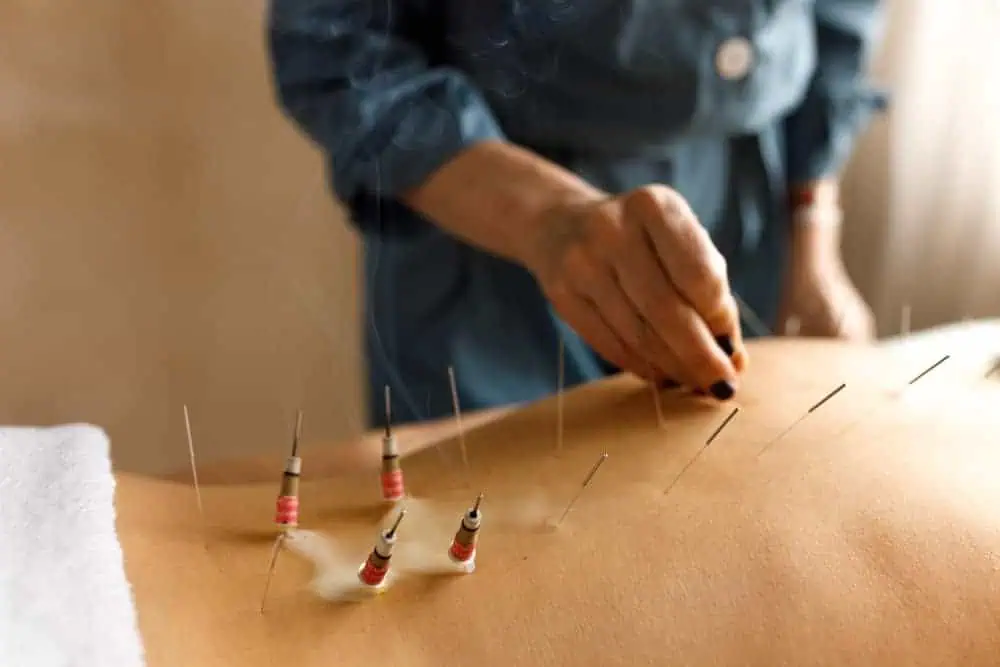
The mechanism sounds almost too straightforward once you understand it, but the research behind it is substantial. The World Health Organization and the National Institutes of Health both recognize acupuncture’s evidence base for pain management. A 2024 clinical update published in PAIN Reports — the official journal of the International Association for the Study of Pain — confirmed that acupuncture is “supported by a large research evidence base” and noted that it “does not just manage pain symptoms but may target the sources that drive pain, such as inflammation.”
Inflammation is a root driver of most chronic pain conditions — arthritis, sciatica, lower back pain, joint pain. Acupuncture works on that underlying driver, not just the sensation of pain sitting on top of it. That’s a meaningful distinction for anyone who’s been frustrated by treatments that offer temporary relief but never seem to address what’s actually causing the problem.
We offer treatment plans that work on multiple levels simultaneously. Our practitioners are New York State licensed acupuncturists and nationally board certified through NCBAHM — the credentialing body required for licensure in 46 states. Our team holds dual certification in both acupuncture and Chinese herbal medicine, which allows us to build comprehensive treatment approaches. Several of our practitioners also have backgrounds in Western medicine, which means we can collaborate directly with your physician, pain management specialist, or orthopedist rather than working in isolation.
Our Huntington Station location on West Jericho Turnpike is straightforward to reach from Syosset, Plainview, Hicksville, and anywhere along the Route 25 corridor. We accept NYSHIP, United Healthcare, Aetna, and Empire BCBS — so for Nassau County’s large public sector workforce, teachers, and healthcare employees, coverage is very likely already in place.
Herbal Remedies for Pain Relief That Work Alongside Treatment
Acupuncture activates the body’s pain-killing system during a session. Herbal medicine helps sustain that effect between sessions. In Traditional Chinese Medicine, these two approaches aren’t separate — they’re designed to work together, addressing different parts of the same underlying imbalance.
The herbs we use aren’t the same as grabbing a supplement off a health food store shelf. When our practitioners certified in Chinese herbal medicine create a formula, they’re tailoring it to your specific pattern — your condition, your constitution, your history. That’s a clinical process, not a general wellness recommendation.
Which Herbs Are Used for Natural Pain Relief?
Several herbs have a well-documented role in pain management, studied in modern clinical research as well as used in Traditional Chinese Medicine for centuries. Turmeric — specifically its active compound curcumin — is one of the most researched anti-inflammatory agents in natural medicine. It works by inhibiting inflammatory pathways at the cellular level, which is why we frequently use it for arthritis, joint pain, and conditions where chronic inflammation is driving the discomfort.
Ginger is another one with strong anti-inflammatory properties, particularly relevant for muscle pain and post-exercise soreness. Willow bark has been used for pain relief for thousands of years — it contains salicin, the compound that eventually led to the development of aspirin. Capsaicin, derived from chili peppers, works differently: it depletes substance P, a neurotransmitter involved in transmitting pain signals from peripheral nerves to the brain. Over time, repeated application reduces the intensity of those signals. Feverfew has shown particular promise for migraines and rheumatoid arthritis-related pain.
What makes Chinese herbal medicine distinct from simply taking any one of these herbs is the formulation. We don’t prescribe turmeric for everyone with joint pain. Our practitioners assess the full picture — where the pain is, what makes it better or worse, how it relates to your overall health — and create a formula that addresses the root pattern, not just the symptom. We’re NCBAHM certified in Chinese herbology, which means this is a clinical skill set, not a general wellness service. For patients across Nassau County, this level of personalized herbal care is available as part of a complete treatment plan — not as an add-on, but as a core part of how we approach chronic pain.
At-Home Pain Management Between Acupuncture Sessions
One of the things patients appreciate most about working with us is that the care doesn’t stop when you leave the clinic. We give you tools you can actually use at home to support your body’s natural pain-relief systems between sessions through diet counseling and lifestyle guidance.
Heat and cold therapy remain two of the most effective at-home options, and knowing when to use which one matters. Cold reduces acute inflammation and numbs sharp pain — useful in the first 48 hours after an injury or flare. Heat improves circulation and relaxes tight muscles — better for chronic stiffness, tension, and the kind of deep ache that builds up after a long week of commuting or sitting at a desk. For Nassau County residents who spend significant time on the LIRR or the LIE, that chronic postural tension in the neck and shoulders is a real and recurring problem that responds well to consistent heat application.
Gentle movement is another underused tool. Yoga, walking, and targeted stretching keep circulation moving through tissues that would otherwise stay compressed and inflamed. You don’t need an intense workout — in fact, for most chronic pain conditions, intensity makes things worse. What you need is consistent, low-load movement that keeps the body from locking up between sessions.
Diaphragmatic breathing — slow, deep breathing that engages the diaphragm rather than the chest — activates the parasympathetic nervous system, which directly reduces pain perception. Your nervous system shifts out of fight-or-flight mode, cortisol drops, and your body becomes more receptive to its own pain-modulating chemistry. Pair that with an anti-inflammatory diet — think Mediterranean-style eating, rich in vegetables, fish, olive oil, and whole grains — and you’re actively supporting the same systems that acupuncture and herbal medicine work to activate.
These aren’t substitutes for professional treatment when the pain is serious. But they’re meaningful complements that keep your progress moving in the right direction between visits.
Natural Remedies for Pain Management in Nassau County, NY — What to Do Next
Your body has a pain-relief system that most people never fully tap into. Endorphins, enkephalins, serotonin, anti-inflammatory pathways — these aren’t alternative concepts. They’re documented physiology. The question is whether your current approach to pain management is actually activating them, or just masking the signal long enough to get through the day.
If you’ve been dealing with chronic pain — back, neck, joints, sciatica, or anything else that’s become a fixture in your daily life — and you haven’t found something that actually addresses the root of it, that’s worth exploring. At-home techniques help. Herbal support helps. But when the pain is persistent and limiting, professional treatment that works with your body’s natural systems rather than around them tends to make the real difference.
We offer a free initial consultation for Nassau County residents who want to understand their options before committing to anything. We accept most major insurance plans, including NYSHIP, Aetna, United Healthcare, and Empire BCBS, so cost doesn’t have to be the reason you wait any longer.