
Summary:
Your orthopedist said the words, and now they’re stuck in your head: knee replacement. Maybe it’s months away, maybe it’s years. Either way, you’re here because surgery doesn’t feel like the right answer yet — and you want to know what else is possible.
That’s a reasonable place to be. Knee replacement is considered a last resort for good reason. It’s major surgery with a long recovery, real risks, and no guarantee of permanent relief. Before you get there, there are evidence-backed, non-surgical options worth understanding. Here’s an honest look at seven of them — and how they can work together as a coordinated approach rather than a scattered list of things to try.
Natural Pain Relief for Knee Replacement: What Actually Works
Most people searching for alternatives to knee surgery have already been through the standard playbook — ibuprofen, cortisone shots, maybe a round of physical therapy. Those approaches manage symptoms, but they don’t address why the knee is breaking down in the first place. That distinction matters.
The alternatives below work best when they’re treated as a system, not a menu. Acupuncture, herbal medicine, dietary changes, and movement all influence the same underlying mechanisms: inflammation, circulation, nerve signaling, and tissue health. When they’re coordinated by a practitioner who understands both the Western diagnosis and the Eastern framework, the results tend to be more meaningful and more lasting.
Acupuncture for Knee Osteoarthritis: What the Research Actually Shows
Acupuncture is probably the most studied non-surgical intervention for knee osteoarthritis, and the evidence is stronger than most people expect. A review of ten randomized controlled trials published through the NIH concluded that acupuncture is an effective treatment for pain and physical dysfunction associated with knee osteoarthritis — and described it as “a viable adjunct or alternative treatment.” That’s not fringe language. That’s coming from peer-reviewed clinical literature.
A separate network meta-analysis reviewed 156 eligible studies and found that acupuncture was statistically significantly better than standard care for knee pain and outperformed muscle-strengthening exercise — one of the most commonly recommended conservative treatments — for alleviating osteoarthritis symptoms. Sham-controlled trials involving up to 570 participants confirmed these findings, with qualified acupuncturists delivering 12 to 23 sessions over the course of treatment.
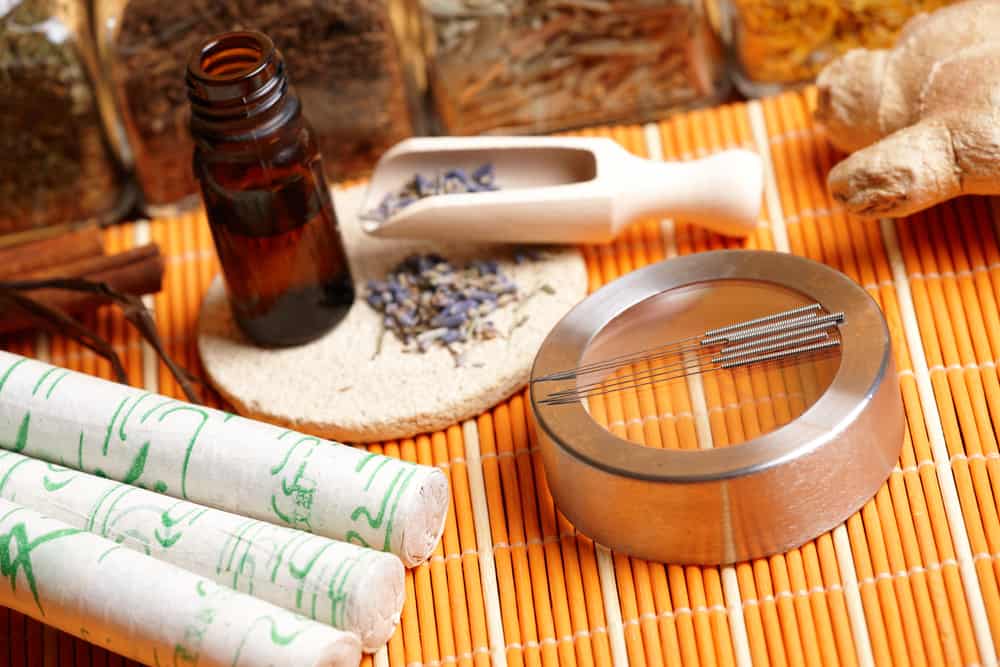
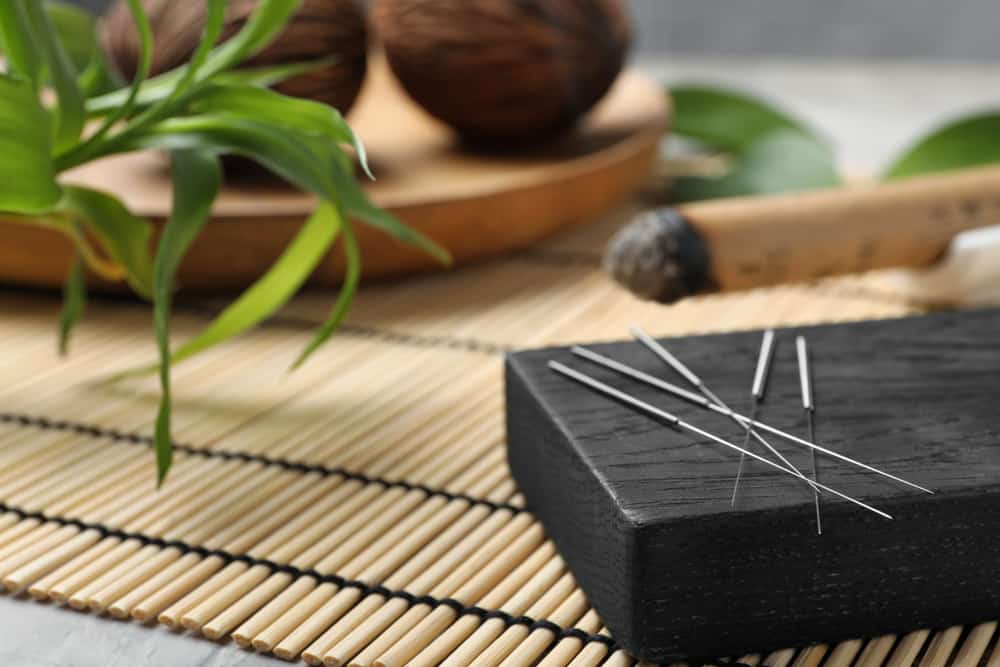
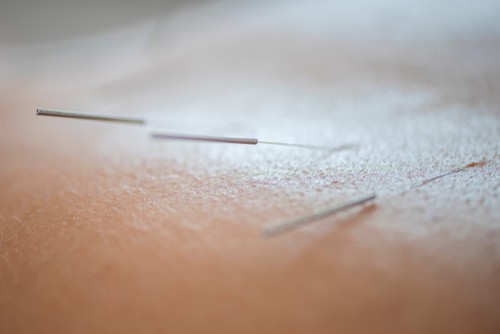
How does it work mechanically? Acupuncture stimulates specific points along the body’s meridian pathways, triggering the release of endorphins and anti-inflammatory compounds, improving local circulation to the joint, and modulating how the nervous system processes pain signals. In a knee that’s inflamed and degenerating, that matters — not as a temporary distraction from pain, but as an intervention that changes the underlying environment the joint is living in.
The timeline question comes up constantly: how long before you feel something? Some patients notice a shift after just one or two sessions. A realistic treatment plan typically runs six to twelve sessions, which is considerably less disruptive than three to six months of post-surgical recovery. For Nassau County residents who commute into the city, manage households, or simply can’t afford to be off their feet, that difference is significant.
Are There Natural Alternatives to Neck Surgery Too?
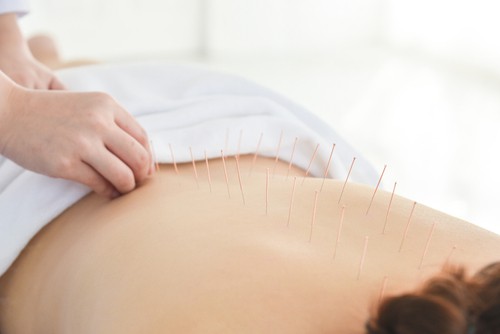
Knee pain gets most of the attention, but the same question comes up for people dealing with cervical spine issues: is there a way to avoid neck surgery? The answer, in many cases, is yes — and the approach overlaps considerably with what works for knee osteoarthritis.
Acupuncture has a well-documented track record for cervical pain, nerve-related symptoms, and the kind of chronic stiffness that often leads to a surgical recommendation. The mechanism is similar — reducing inflammation, improving circulation, and addressing the muscular tension that places compressive load on the cervical joints. When combined with Chinese herbal medicine and targeted lifestyle adjustments, it becomes a genuinely comprehensive alternative to the surgical path.
What’s worth understanding is that the spine and the joints share a common problem: conventional medicine tends to treat them structurally, as a mechanical failure that needs to be fixed with hardware or replacement parts. TCM approaches them differently — as a system that’s out of balance, where restoring proper function is more sustainable than replacing components. That reframe doesn’t mean ignoring imaging or dismissing your specialist’s findings. It means asking whether the system can be supported back toward health before surgery becomes necessary.
For patients in Nassau County who have been told they’re candidates for cervical fusion or neck surgery, the same logic applies as it does for knee replacement. Try the non-invasive options first, with a practitioner who understands the full picture — both the Western diagnosis and the Eastern framework for addressing it. Surgery will still be available if it’s truly needed. But you owe it to yourself to find out whether it is.
Plant-Based Pain Relief for Knee Pain: The Herbs With Real Evidence
Chinese herbal medicine isn’t a vague supplement category — it’s a clinical discipline with thousands of years of documented use and, increasingly, a growing base of modern research. Several specific herbs and plant compounds have been studied directly for knee osteoarthritis, and the results are worth knowing.
When these herbs are prescribed alongside acupuncture as part of a coordinated treatment plan, they work synergistically — addressing inflammation through multiple pathways simultaneously rather than relying on a single mechanism. That’s a meaningful distinction from taking a turmeric capsule off a drugstore shelf.
Turmeric, Willow Bark, and Boswellia: What the Clinical Trials Found
Turmeric — specifically its active compound curcumin — has become one of the most researched natural anti-inflammatories for joint pain. A 2025 systematic review and network meta-analysis, drawing on databases through August 2024, found that all turmeric preparations significantly reduced WOMAC pain scores in knee osteoarthritis patients. Bioavailability-enhanced curcuminoid preparations showed a 30% reduction in pain scores. When combined with active drug comparators, the reductions were even greater. That’s not anecdotal — that’s controlled clinical data.
Willow bark has been used for pain relief since before aspirin existed, and for good reason. It contains salicin, which acts similarly to aspirin in the body but in a slower, more sustained way. Research has found that 240 mg of willow bark extract daily reduced pain scores in osteoarthritis patients compared to placebo. It’s not a miracle compound, but it’s a meaningful one — particularly for patients who want to reduce their reliance on NSAIDs, which carry their own long-term risks with chronic use.
Boswellia serrata, also known as Indian frankincense, works through a different mechanism: it directly inhibits the inflammatory enzymes that drive cartilage breakdown and joint swelling. It’s one of the most clinically studied herbal anti-inflammatories for osteoarthritis and has shown consistent results in reducing both pain and stiffness. Ginger, ashwagandha, and green tea extract round out the plant-based toolkit, each contributing anti-inflammatory compounds that can support joint health when used appropriately.
The key phrase there is “when used appropriately.” Herbal medicine isn’t a matter of picking the right bottle at a health food store. Effective TCM herbal prescriptions are formulated for the individual — accounting for your specific pattern of symptoms, your constitution, any medications you’re taking, and how your body is responding over time. That’s what separates a clinical herbal protocol from a generic supplement.
How Nassau County Residents Can Use an Integrated TCM Approach to Avoid Surgery
Nassau County’s winters are genuinely hard on arthritic joints. The cold, the damp, the barometric pressure swings that come with every nor’easter rolling up the coast — if your knee pain reliably gets worse from November through March, you’re experiencing something well-documented and not imaginary. The same goes for the seasonal transitions in spring and fall, when pressure changes are particularly pronounced along the south shore.
For the large number of Nassau County residents who commute into the city via the LIRR, chronic knee pain isn’t just a quality-of-life issue — it’s a daily logistical problem. Stairs at Penn Station, standing on platforms, walking from the parking lot — every one of those moments is a reminder of what the knee can’t do anymore. People in Massapequa, Merrick, Wantagh, Valley Stream, and Oceanside deal with this every day.
An integrated TCM approach addresses this practically. Acupuncture reduces inflammation and improves how the joint functions. Herbal medicine supports the process between sessions, addressing the systemic inflammation that contributes to cartilage breakdown. Dietary guidance — reducing foods that drive inflammatory responses and increasing those that support joint tissue — gives the body what it needs to heal. Lifestyle guidance covers movement patterns, sleep, and the daily habits that either accelerate or slow joint degeneration.
What makes this genuinely different from trying one thing at a time is coordination. When a practitioner designs a plan that integrates all of these elements — and adjusts it based on how you’re responding — the results tend to compound. We offer this approach at our Huntington and Ronkonkoma locations, and it’s accessible to patients across Nassau County. For those covered by NYSHIP, United Healthcare, Aetna, or Empire Blue Cross Blue Shield, acupuncture may already be covered under your existing plan — which removes one of the most common reasons people put this off.
The other thing worth saying clearly: this approach works alongside your existing medical care. Our practitioners have backgrounds in both Eastern and Western medicine, which means we can speak the same language as your orthopedist and collaborate on your care rather than compete with it. You don’t have to choose between your surgeon’s opinion and a natural alternative. You can pursue both, intelligently, with people who understand the full picture.
What to Do Before You Commit to Knee Replacement Surgery
Surgery will still be an option if you need it six months from now. What you can’t undo is skipping the non-invasive options before going under the knife. The evidence for acupuncture, Chinese herbal medicine, and plant-based pain relief for knee osteoarthritis is real, it’s published, and it’s specific — not vague promises about ancient wisdom.
The most important thing is starting with a clear picture of where you are and what a coordinated plan would actually look like for your situation. Not a generic protocol, but a real evaluation that accounts for your history, your imaging, your symptoms, and your goals.
If you’re in Nassau County and you’ve been told knee replacement is on the table, we offer a free consultation and comprehensive evaluation — the right starting point before making a decision you can’t reverse.