Summary:
If you’ve been dealing with depression — whether it’s a persistent low mood, emotional exhaustion, or that flat, disconnected feeling you can’t quite shake — you already know that finding the right support isn’t always straightforward. Medication helps some people and not others. Therapy is valuable but doesn’t always address the physical side of what’s happening. And the idea of just waiting it out rarely feels like a real option.
Chinese herbal medicine has been used to treat depression and mood disorders for centuries, and modern research is catching up to what practitioners have observed clinically for a long time. Here’s an honest look at how it works, what the evidence says, and what care actually looks like when it’s done well.
How TCM Depression Treatment Works Differently Than What You're Used To
Western medicine tends to treat depression as a brain chemistry problem — a deficit of serotonin or dopamine that medication can correct. That framework helps a lot of people. But it doesn’t explain why two people with the same diagnosis respond so differently to the same treatment, or why some people feel better on antidepressants but still don’t feel like themselves.
Traditional Chinese Medicine approaches depression differently. Rather than applying a single diagnosis to a set of symptoms, TCM looks for the underlying pattern driving those symptoms — and that pattern varies from person to person. The goal isn’t to suppress the symptoms. It’s to understand what’s out of balance and correct it at the source.
What Does TCM Actually Mean by "Root Cause" When It Comes to Depression?
In TCM, depression is most commonly understood as a disruption in the flow of Qi — the body’s vital energy — often centered in the liver, heart, or spleen organ systems. The most frequently identified pattern is liver Qi stagnation, which in TCM terms describes a state where energy that should be moving freely has become blocked. The result tends to show up as low mood, irritability, a sense of heaviness or tightness in the chest, fatigue, and disrupted sleep.
Other patterns that commonly underlie depression include heart-spleen deficiency — which tends to present with mental restlessness, poor memory, difficulty concentrating, and a kind of anxious sadness — and phlegm-dampness obstruction, which is associated with mental fog, sluggishness, and a feeling of being emotionally numb or stuck.
The reason this matters isn’t just theoretical. A practitioner who identifies your specific TCM pattern will prescribe a completely different herbal formula than they would for someone presenting with a different pattern — even if both of you walked in with the same Western diagnosis of depression. That level of individualization is the foundation of how Chinese herbal medicine works, and it’s a meaningful departure from the one-size-fits-all approach that leaves a lot of people frustrated with their care.
The diagnostic process itself is thorough. It involves a detailed health history, careful observation, and palpation — including pulse and tongue diagnosis, which are traditional TCM tools for assessing internal organ function and the state of Qi and blood. It’s not a quick intake form. It’s a genuine evaluation designed to understand you as an individual, not just your symptoms.
Which Chinese Herbal Formulas Are Most Commonly Used for Depression?
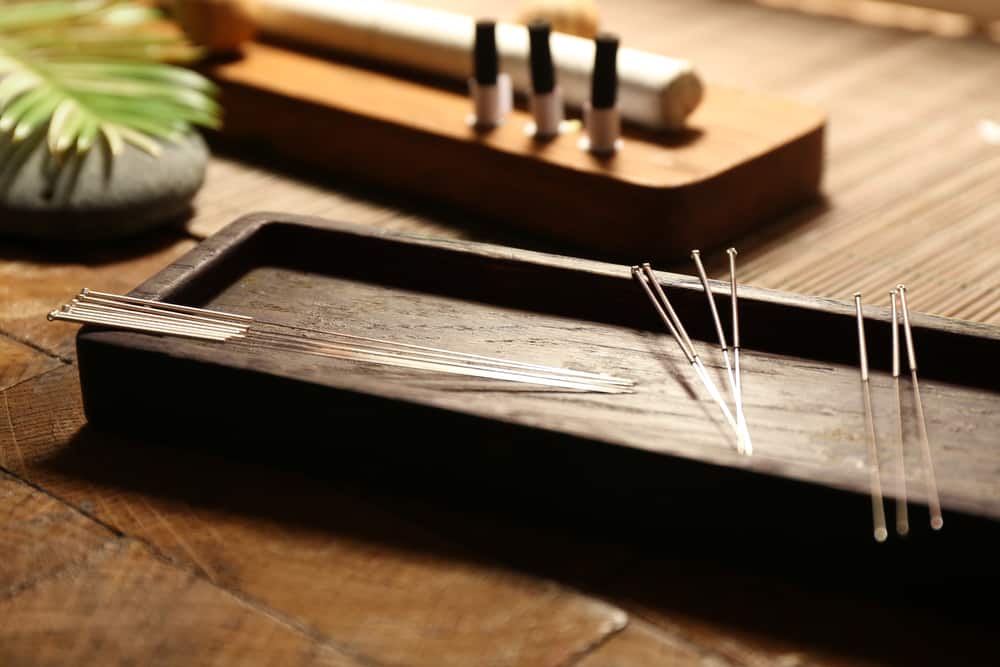
There are hundreds of formulas in the Chinese herbal pharmacopeia, but a handful appear consistently in both clinical practice and research when it comes to depression and mood disorders.
Xiao Yao San — sometimes called “Free and Easy Wanderer” — is probably the most widely studied TCM formula for depression. It’s been in use for over 600 years and is particularly suited to liver Qi stagnation patterns. It works by soothing the liver, regulating Qi flow, and supporting the spleen, and it has a calming effect on anxiety and emotional tension that many patients notice relatively quickly. A systematic review of 26 randomized controlled trials involving 1,837 patients found that Xiao Yao San combined with antidepressants outperformed antidepressants alone — without increasing the rate of side effects. That’s a meaningful finding for anyone who’s been frustrated by medication side effects.
Gui Pi Tang, or Restore the Spleen Decoction, is another commonly used formula, particularly for patients whose depression comes with significant anxiety, forgetfulness, insomnia, and a kind of heart-racing restlessness. It contains herbs like Polygala Root and longan fruit, which have calming, heart-nourishing properties. Chaihu Shugan Decoction is frequently prescribed for Qi stagnation patterns with more pronounced irritability and chest tightness.
For women experiencing depression tied to hormonal shifts — postpartum, perimenopause, PCOS, or menstrual cycle-related mood changes — herbs like Dang Gui and Bai Shao are often central to the formula. Both have been shown to support estrogen and progesterone regulation, which is one reason TCM can be particularly effective for hormonal depression that antidepressants alone don’t fully address.
It’s worth noting that formulas are rarely used exactly as written in classical texts. A qualified practitioner will modify the base formula based on your specific presentation, adjusting individual herbs and dosages as your condition changes over time. That ongoing reassessment is part of what makes the approach effective — and it’s very different from taking the same supplement indefinitely without any monitoring.
Chinese Medicine for Depression: What the Research Actually Shows
The evidence base for Chinese herbal medicine in depression has grown considerably over the past decade. A 2024 network meta-analysis published in Frontiers in Pharmacology identified eleven herbal formulas with significant promise for treating depression. Separate research has identified 45 individual antidepressant herbal medicines operating through multiple biological mechanisms — including serotonin and dopamine pathways, GABA receptor interactions, neurogenesis, anti-inflammatory effects, and gut microbiota modulation.
These aren’t fringe findings. They’re published in peer-reviewed journals and increasingly cited by researchers who study integrative mental health. The science is still developing, but the direction is consistent: Chinese herbal medicine affects real biological systems in ways that are relevant to depression.
Is Chinese Herbal Medicine Safe to Use Alongside Antidepressants?
This is one of the most common questions people ask before starting TCM, and it deserves a straightforward answer: in many cases, yes — but it requires careful management and full transparency with both your TCM practitioner and your prescribing physician.
Some herbs interact with medications, including psychiatric medications. St. John’s Wort, for example, is widely known to interfere with SSRIs and several other drug classes. Classical TCM formulas are different from single-herb supplements, but the principle still applies — your practitioner needs to know everything you’re currently taking before they prescribe anything.
The good news is that the integrative model — using TCM alongside conventional care rather than instead of it — is well-supported by research. The Xiao Yao San studies mentioned earlier are a good example: the strongest results came from combining herbal medicine with antidepressants, not from replacing them. Many patients find that TCM helps them manage the side effects of their medications, supports their overall mood stability, and in some cases allows them to work with their doctor toward a lower dose over time. That last part should always involve your prescribing physician directly — not a decision made unilaterally.
We work alongside your existing care team. If you’re seeing a psychiatrist or therapist, we’re not asking you to walk away from that. We’re asking to be part of a broader picture of support that addresses what conventional care sometimes misses — the physical, energetic, and lifestyle dimensions of mood health that don’t show up on a prescription pad.

What Nassau County Residents Should Know Before Starting Chinese Therapy for Depression
Nassau County is dealing with a real mental health challenge right now. A 2022 community health survey found that mental health surpassed cancer as the top community health concern identified by both Nassau and Suffolk County residents. That’s not a small shift. It reflects something a lot of people here are quietly navigating every day.
The demand for mental health support has outpaced availability. Long wait times for psychiatrists and therapists are a documented issue across Nassau County, and many residents are looking for options that are accessible, effective, and don’t require a three-month wait for an initial appointment.
Chinese therapy — meaning the full TCM approach of herbal medicine, acupuncture, dietary guidance, and lifestyle support — is one of those options. And it’s more accessible here than many people realize. We accept NYSHIP, United Healthcare, Aetna, and Empire BCBS, which means for many Nassau County residents, this kind of care is covered. We also offer a free initial consultation so you can have a real conversation about your situation before committing to anything.
We see patients from across Nassau County — Valley Stream, Merrick, Massapequa Park, Wantagh, Rockville Centre, Bellmore, Oceanside, Lynbrook, and dozens of other communities. The Long Island lifestyle — the commutes, the cost of living, the pressure of keeping everything moving — is a real contributor to the kind of chronic stress that builds into depression over time. TCM doesn’t just treat the mood symptoms. It addresses the toll that sustained stress takes on the body, the sleep, the digestion, and the energy that holds everything else together.
If you’ve been managing depression for a while and feel like you’re only getting part of the picture from your current care, it’s worth understanding what a root-cause approach actually looks like in practice. That’s what the free consultation is for — not a sales conversation, but a real clinical discussion about whether this is the right fit for you.
Finding the Right Depression Support in Nassau County, NY
Chinese herbal medicine isn’t a replacement for conventional mental health care, and any practitioner who tells you otherwise isn’t being straight with you. What it is — when it’s practiced well — is a genuinely different approach that addresses the root cause of depression rather than managing its surface symptoms. The research supports it. The clinical history behind it is thousands of years deep. And for the right person, it can make a meaningful difference.
The key is working with someone who is properly trained — nationally board certified in both acupuncture and Chinese herbology, not just one — and who takes the time to understand your specific pattern before prescribing anything.
If you’re in Nassau County and you’re curious whether this approach could help you, we offer a free consultation to walk through exactly that question. No pressure, just a real conversation.