
Summary:
Most people who look into acupuncture in Nassau County have the same hesitation: they don’t know what it’s going to cost, and they don’t want to find out the hard way. Healthcare pricing in New York is notoriously hard to read, and acupuncture sits in an awkward middle ground — real medicine, but not always treated like it by insurers.
Here’s the honest version: acupuncture costs vary, insurance covers more than you’d think, and for many Long Island patients, the out-of-pocket number is a lot more manageable than expected. Let’s walk through what actually drives the cost and how to figure out what you’d pay.
Acupuncture Prices in Nassau County: What a Typical Session Actually Costs
Nationally, a private acupuncture session runs somewhere between $75 and $150. In the New York metro area — which includes Long Island — you’re generally looking at the higher end of that range, though you won’t necessarily pay Manhattan prices when you’re staying local to Nassau County.
Your first appointment typically costs more than follow-ups because it includes a full health evaluation alongside the treatment itself. After that, follow-up sessions tend to run lower. Many practices also offer package pricing for patients who commit to a treatment plan upfront, which brings the per-session cost down meaningfully.
The number of sessions you’ll need depends on what you’re treating. Acute issues — a flare-up, a recent injury — can show real improvement in one to three sessions. Chronic conditions like long-standing back pain, hormonal imbalances, or fertility support typically call for six to twelve sessions over a period of weeks.
What Makes Acupuncture Cost More — or Less — in Your Situation
A few things drive price variation that are worth understanding before you call anywhere. The biggest one is whether you’re paying out of pocket or going through insurance. If your plan covers acupuncture — and many do — your actual cost per session could be as low as a $15 to $50 copay rather than the full session rate. That changes the math considerably.
Beyond insurance, the practitioner’s credentials matter. A licensed acupuncturist in New York has completed a master’s-level program, logged over 650 hours of supervised clinical training, and passed national board exams through the NCBAHM. That’s a meaningful level of training, and it’s reflected in pricing. A practitioner who also holds certification in Chinese herbology — which goes beyond the state licensing requirement — brings additional depth to your care.
Specialization is another factor. Fertility acupuncture, for example, requires a practitioner who understands the timing of IUI and IVF cycles, not just general acupuncture technique. That expertise commands a higher rate, and for patients going through fertility treatment, it’s worth the difference.
Session length and additional modalities also affect cost. If your treatment includes electroacupuncture, cupping, or a Chinese herbal consultation alongside the needling, expect the session fee to reflect that. A straight acupuncture session with no add-ons will typically cost less than a comprehensive visit that addresses multiple aspects of your condition.
Finally, clinic setting plays a role. Community acupuncture — group rooms where multiple patients are treated simultaneously — can bring costs down to $25 to $60 per session, but you’re trading privacy and personalization for price. A private one-on-one session with a practitioner who knows your full history and has built a treatment plan around your specific situation is a different experience entirely.
Therapeutic Acupuncture vs. General Wellness: Why the Distinction Matters for Cost
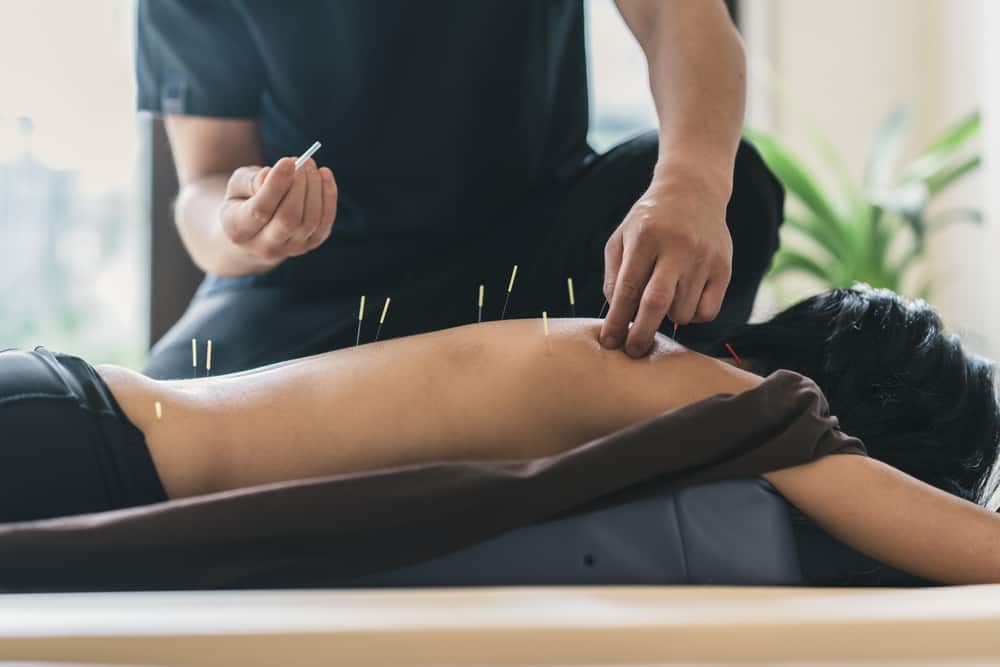
When insurers talk about covering acupuncture, they’re almost always talking about therapeutic acupuncture — treatment directed at a diagnosed condition, documented with clinical language, and carried out by a licensed provider. This is different from general wellness or cosmetic acupuncture, which most plans don’t cover.
The distinction matters practically because it affects whether your insurance will reimburse the visit. A practitioner with Western medical training understands how to document treatment in the language insurers require. That’s the difference between a claim getting approved and a claim getting denied. Our acupuncturists hold both Eastern and Western medical backgrounds, which means we can work within the insurance system in a way that many acupuncture-only practitioners cannot.
For Nassau County residents dealing with conditions like chronic low back pain, sciatica, anxiety, insomnia, or fertility challenges, this matters. These are conditions that insurers recognize as medically appropriate for acupuncture — but only when the treatment is documented correctly and the provider is credentialed properly.
Medicare now covers up to 12 acupuncture sessions in a 90-day period specifically for chronic lower back pain. New York State has also passed legislation requiring large group insurance policies to cover acupuncture services. The coverage landscape has shifted significantly in recent years, and many patients who assumed they weren’t covered actually are — they just never checked.
If you’re not sure whether your treatment qualifies as therapeutic acupuncture under your plan, call us. We’ll help you figure out what your insurance actually covers before you commit to anything.
Does Insurance Cover Acupuncture in New York?
More often than people expect, yes. We accept NYSHIP, United Healthcare, Aetna, and Empire BCBS — four of the most common insurance plans held by Nassau County residents, including state employees, teachers, healthcare workers, and private-sector professionals.
For patients whose plans are in-network with us, the cost per session often drops to a copay. That’s a very different number than the full out-of-pocket rate, and it’s the reason we always encourage people to call and verify their coverage before assuming acupuncture isn’t affordable for them.
We also accept New York State No-Fault insurance and Workers’ Compensation, which opens up access for patients who might not have thought to ask.
No-Fault Insurance and Acupuncture in Nassau County: What NY Residents Should Know
New York is a no-fault state, which means if you were injured in a car accident, your auto insurance is responsible for covering medically necessary treatment — regardless of who was at fault. What a lot of Nassau County residents don’t realize is that licensed acupuncture is included in that coverage.
The New York Department of Financial Services confirmed that medically necessary acupuncture performed by a licensed acupuncturist qualifies as a covered no-fault expense. For someone recovering from whiplash, neck pain, back pain, or soft tissue injuries after an accident on the LIE, Hempstead Turnpike, or Sunrise Highway, that’s significant. It means you can access professional acupuncture care as part of your recovery without paying anything out of pocket.
We accept no-fault insurance and have experience working with patients navigating post-accident recovery. If you’ve been in an accident and you’re dealing with pain that hasn’t responded to other treatment, it’s worth a call to find out whether acupuncture is covered under your policy.
Workers’ Compensation works similarly. If you were injured on the job — whether you work in construction, healthcare, or any other field — we accept Workers’ Comp as well. Many Nassau County residents in physically demanding jobs don’t know this is an option until they ask.
The broader point is this: the assumption that acupuncture is always an out-of-pocket expense is outdated. Between major medical insurance, no-fault coverage, Workers’ Comp, and FSA or HSA accounts — which can also be used for acupuncture — there are more ways to offset the cost than most people realize.
NYSHIP, Empire BCBS, and Aetna: Checking Your Acupuncture Coverage Before Your First Visit
If you carry NYSHIP — the New York State Health Insurance Program — you’re in a group that includes a large portion of Nassau County’s workforce: teachers, nurses, state and county government employees, court workers, and others in the public sector. NYSHIP does include acupuncture benefits, and we are an accepted provider. For many NYSHIP members, that means your sessions are covered at the copay level.
Empire BCBS and Aetna are also widely held across Nassau County’s private-sector workforce, and both include acupuncture coverage under many of their plan tiers. United Healthcare similarly covers acupuncture under a range of plans. The catch with any insurer is that coverage specifics vary by plan — your employer’s version of an Aetna plan may have different acupuncture benefits than someone else’s. That’s why verifying your specific coverage before your first visit is worth the five-minute phone call.
We make that process straightforward. When you reach out to us, we can help confirm whether your plan is accepted and what your likely out-of-pocket cost will be. There’s no pressure and no surprise bill waiting at the end of your first session.
One more thing worth knowing: if you have a Flexible Spending Account or Health Savings Account, acupuncture is an eligible expense. That means you’re paying with pre-tax dollars, which effectively reduces your real cost by whatever your marginal tax rate is. For many Nassau County households, that’s a meaningful reduction — and it’s a detail that often gets overlooked entirely.
We offer a free initial consultation for new patients. That means you can come in, talk through your situation, understand what a treatment plan would look like, and get a clear picture of your costs — before you spend anything.
Ready to Find Out What Acupuncture Would Actually Cost You in Nassau County?
The honest answer to “how much does acupuncture cost?” is: it depends — but probably less than you’re assuming, especially once insurance enters the picture. A typical private session on Long Island runs $75 to $150 without insurance. With coverage through NYSHIP, Empire BCBS, Aetna, or United Healthcare, that often drops to a copay. No-fault and Workers’ Comp can reduce your cost to zero for qualifying patients.
What matters most isn’t the sticker price — it’s whether the treatment is right for your situation, delivered by someone with the training and experience to actually help. Our practitioners hold New York State licensure, national board certification in both acupuncture and Chinese herbology, and over 18 years of experience treating patients across Long Island.
If you’re in Mineola, Massapequa, Rockville Centre, Hicksville, Merrick, or anywhere else in Nassau County and you’ve been on the fence about cost, reach out to us. The free consultation is a real conversation — no commitment, no pressure, just a clear picture of what care would look like for you.