Summary:
If you’ve heard of acupuncture but aren’t quite sure what “traditional Chinese medicine” actually means, you’re not alone. Most people use the terms interchangeably — and most people are missing about 80% of the picture. TCM is a complete healthcare system, not a single treatment. It has its own diagnostic logic, its own toolkit, and a clinical history stretching back over 3,000 years. Whether you’re dealing with chronic pain, anxiety, fertility challenges, or something that just hasn’t responded the way you hoped to conventional care, understanding what TCM actually is — and how it works — is worth your time.
What Traditional Chinese Medicine Actually Is (And Why It's Not Just Acupuncture)
Traditional Chinese medicine is a healthcare system built on the idea that the body functions as an interconnected whole. Rather than isolating a symptom and targeting it directly, TCM asks a different question: what underlying imbalance is causing this in the first place? That shift in orientation — from symptom suppression to root cause — is what makes it fundamentally different from the conventional model most of us grew up with.
Acupuncture is part of TCM, yes. But so is herbal medicine, therapeutic massage (called tui na), cupping, gua sha, moxibustion, and dietary and lifestyle guidance. These aren’t separate practices that happen to coexist — they’re individual tools within a single system, used in combination based on what your diagnosis actually calls for. Two people walking in with the same Western diagnosis can leave with completely different treatment plans, because TCM treats the person, not the label.
How Acupuncture Chinese Medicine Works — The Physiology Behind It
The concept most people stumble on is qi — often described as the body’s vital energy flowing through channels called meridians. It sounds abstract, and that’s where a lot of skepticism starts. But here’s what the research actually shows: acupuncture stimulates the release of endorphins and serotonin, modifies how the nervous system processes pain signals, and promotes circulation in targeted areas. These are measurable, physiological effects.
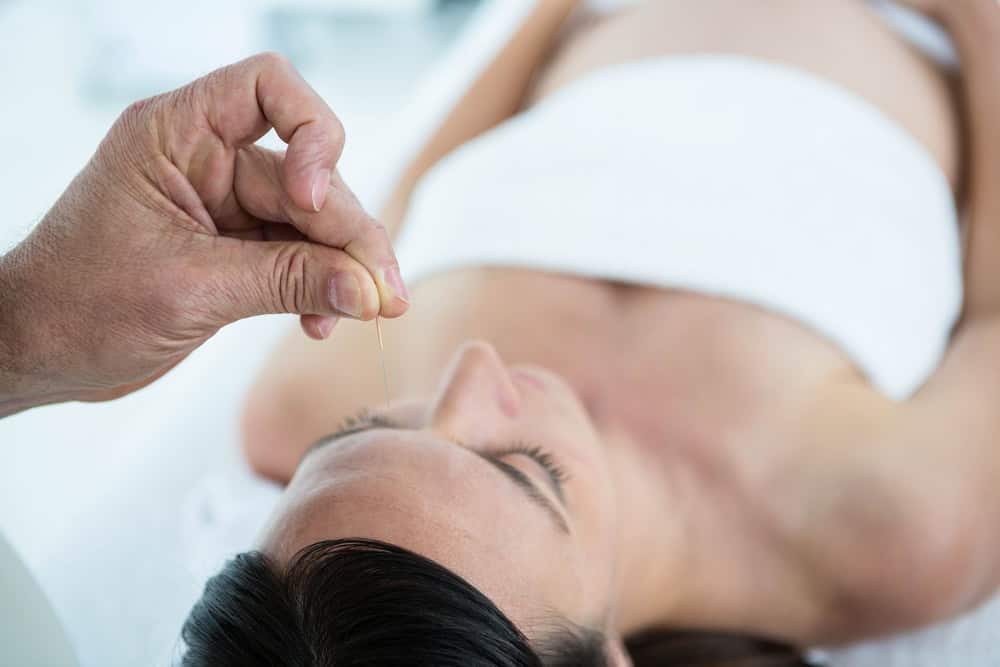
The World Health Organization and the National Institutes of Health have both endorsed acupuncture for specific conditions — that’s not a fringe endorsement. Think of the meridian system as a map of the body’s functional relationships. When something is off in one area, it often shows up somewhere else entirely — which is why a TCM practitioner might treat your chronic headaches by working on points along your neck, shoulders, or even your feet, depending on what the full picture looks like.
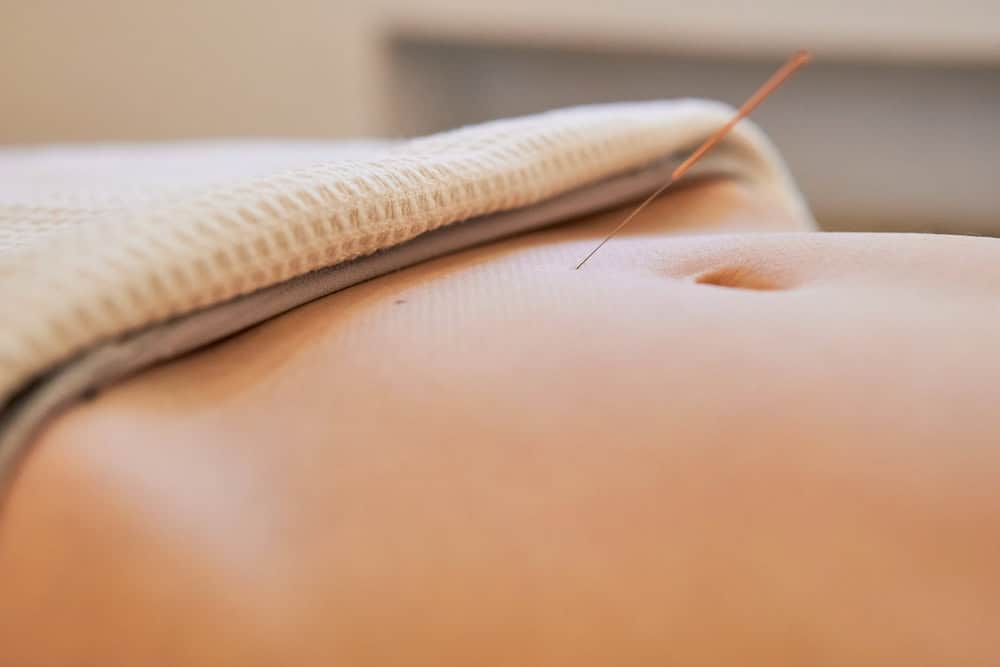
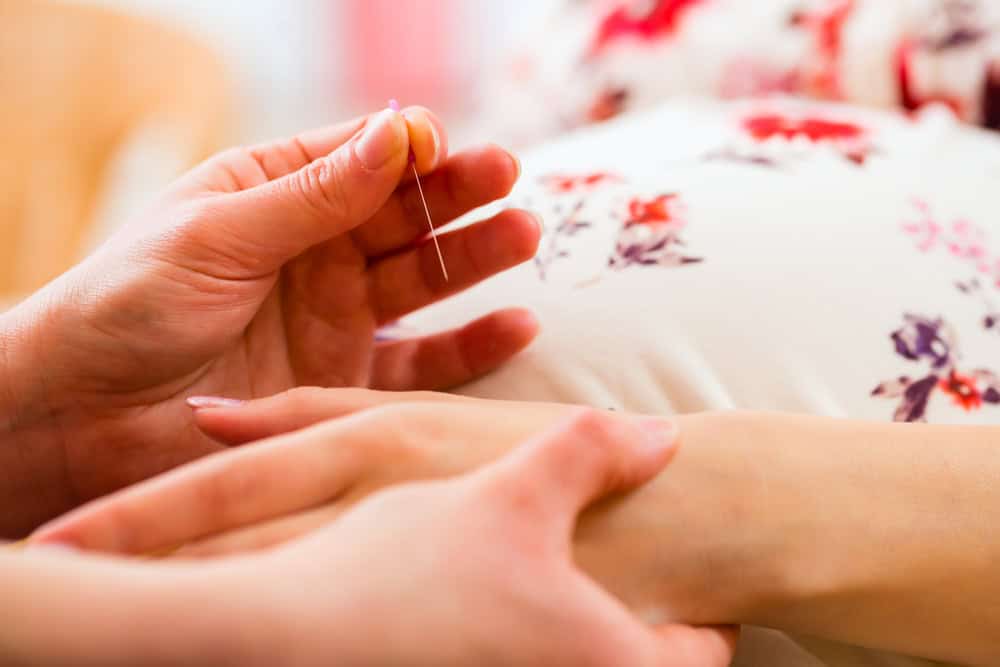
The needles used are hair-thin and sterile. Most patients describe the sensation as a mild pressure or warmth, and many fall asleep on the table. It’s not what people expect when they hear the word “needles.”
What makes acupuncture particularly relevant for Nassau County, NY patients is the profile of conditions it addresses best: chronic pain from repetitive stress and sedentary commuting patterns, anxiety and sleep disruption from high-pressure work environments, and hormonal imbalances that conventional medicine often manages rather than resolves. The physiological mechanisms behind acupuncture — nervous system regulation, endorphin release, improved circulation — map directly onto these concerns.
The Full TCM Toolkit: What Else Is Involved Beyond Needles
Herbal medicine is arguably the most underappreciated part of TCM. Chinese herbal formulas have been refined over centuries to address everything from everyday stress and poor sleep to chronic digestive issues and hormonal imbalance. At our practice, herbal formulas are prescribed individually — not pulled from a generic supplement shelf — and sourced from GMP-compliant suppliers, meaning they meet the same quality standards applied to pharmaceutical production. If you’re on other medications, that’s a conversation we have upfront, not an afterthought.
Cupping is another modality that’s gotten more attention lately, partly because athletes started showing up to competitions with the circular marks on their backs. What it actually does is create suction that draws stagnant blood and fluid to the surface, promoting circulation and releasing tension in the underlying tissue. Gua sha works on a similar principle — a smooth tool is used to scrape along the skin’s surface, reducing inflammation and improving blood flow. Neither is painful in the way people imagine, and both are typically used as part of a broader treatment plan rather than standalone sessions.
Tui na — traditional Chinese therapeutic massage — is another tool that often surprises people. It’s not a relaxation massage in the Western spa sense. It’s a targeted, clinical technique used to address musculoskeletal complaints, promote qi flow through specific channels, and complement acupuncture in a treatment plan. Moxibustion, which uses the gentle heat of burning dried mugwort near specific acupoints, is used to warm and stimulate areas where cold or stagnation is part of the diagnosis.
Dietary and lifestyle guidance rounds out the toolkit — because TCM has always understood that what you eat, how you sleep, and how you manage stress aren’t separate from your health outcomes. They’re central to them.
TCM Chinese Medicine in Nassau County, NY: What Local Patients Actually Ask
Nassau County has a mature, well-informed wellness market. People here do their research, compare options, and ask good questions before they commit to anything. We’ve heard most of them. What follows are the ones that come up most consistently — answered plainly, without the usual hedging.
Does Insurance Cover Traditional Chinese Medicine in Nassau County, NY?
More often than people expect — yes. We accept NYSHIP, United Healthcare, Aetna, and Empire BCBS. For Nassau County residents, that’s a meaningful list. NYSHIP alone covers a significant portion of the county’s public sector workforce: county government employees, school district staff, state agency workers, and many in the private sector who have landed on one of the other major plans.
If you work for a Nassau County school district or a state agency and you’ve been putting off exploring acupuncture because you assumed it was entirely out of pocket, it’s worth checking your specific plan before you make that assumption. Coverage varies by plan and by condition, so we always recommend confirming your benefits before your first visit.
The idea that TCM is automatically a cash-pay-only proposition isn’t accurate for a lot of Nassau County residents — and for many, that changes the calculation entirely. Removing the financial barrier is often what moves someone from “I’ve been thinking about this for a while” to actually booking an appointment.

Is TCM Safe? And How Do I Know If a Practitioner Is Qualified?
This is the right question to ask, and any practitioner worth seeing will welcome it. In New York State, acupuncture licensure requires a minimum of 4,050 hours of classroom instruction, supervised clinical experience, and out-of-classroom study — one of the most rigorous requirements in the country. Applicants must also pass the NCCAOM examination, the national certification standard used by 41 states and Washington, D.C. It’s not a weekend course. It’s graduate-level medical training.
Our practitioners at Think Acupuncture hold New York State licensure and are nationally board certified in both acupuncture and Chinese herbology — the highest credential combination the NCCAOM offers. The dual certification matters because it signals a full-system understanding of TCM, not just needle technique.
On the question of safety more broadly: acupuncture needles are single-use, sterile, and hair-thin. Herbal formulas at our practice are sourced from GMP-compliant suppliers and prescribed individually by a practitioner who knows your full health picture, including any medications you’re currently taking. The intake process at Think Acupuncture is thorough — we cover your medical history, sleep, stress levels, lifestyle patterns, and TCM-specific diagnostics including pulse and tongue diagnosis.
We work alongside your existing healthcare providers, not in opposition to them. Several of our patients are also receiving care through Northwell Health or NYU Langone Long Island. If you have a physician you trust, we’re not asking you to choose. We’re asking you to consider whether there’s a gap in your current care that TCM might be able to fill.
Where to Start If You're Curious About TCM in Nassau County
TCM isn’t for everyone, and we wouldn’t claim otherwise. But if you’ve been managing a chronic condition — stress, pain, anxiety, sleep issues, fertility challenges — and you’re not fully satisfied with where you’ve landed, it’s worth understanding what a complete system of care might look like. Not as a replacement for what’s working, but as a way to address what isn’t.
The first step is usually just a conversation. You don’t need to have it all figured out before you call. If you have questions about whether your insurance covers acupuncture, what to expect from a first appointment, or whether TCM is a reasonable fit for your specific situation, those are exactly the conversations we’re set up to have.
Think Acupuncture has two Long Island locations — Ronkonkoma at 631-981-7422 and Huntington Station at 516-509-5444. If you’re ready to move from curious to informed, reach out and we’ll take it from there.