
Summary:
You’ve probably tried the serums. Maybe you’ve looked into Botox and decided it wasn’t for you — or you tried it and didn’t love the results. Either way, you’re still looking for something that actually works without freezing your face or committing to a cycle of repeat injections every few months.
Facial acupuncture keeps coming up, and you want to know if it’s real. Not the wellness-blog version — the actual clinical answer.
Here’s what the research shows, how the process works, and what you can realistically expect if you’re considering it as a long-term approach to skin health.
How Facial Acupuncture for Wrinkles Actually Works
The mechanism isn’t mysterious once you understand it. When ultra-fine needles are placed in the skin, they create what researchers call positive microtraumas — tiny, controlled signals that tell your body to activate its healing response. That response includes increased blood flow, better lymphatic circulation, and most importantly, a surge in fibroblast activity. Fibroblasts are the cells responsible for producing collagen.
This is the same biological process behind microneedling, which has years of cosmetic dermatology research behind it. The difference is that facial acupuncture also incorporates body acupoints — points on the hands, arms, legs, and feet that influence circulation, stress response, and systemic health. You’re not just treating the surface. You’re addressing what’s underneath it.
Is Acupuncture Effective for Wrinkles? What the Research Shows
This is the question most people actually want answered before they book anything, and it’s a fair one.
A 2025 randomized controlled trial published in the Journal of Cosmetic Dermatology (Haghir et al.) evaluated combined facial and body acupuncture on frown lines in women aged 30 to 59. Participants received twice-weekly sessions for six weeks. By week seven, 63 to 72 percent of treated participants showed visible improvement — both at rest and during facial movement. What made the findings particularly notable was that wrinkle scores continued to improve even after the treatment course ended. That’s not a temporary cosmetic effect. That’s collagen remodeling continuing to do its work.
An earlier pilot study from Kyung Hee University Hospital (Yun et al., 2013) found statistically significant increases in facial elasticity after just five sessions over three weeks. Participants reported firmer, more toned skin, and imaging confirmed visibly softer wrinkles. A 2024 retrospective study also supported facial acupuncture’s effectiveness specifically on nasolabial folds and marionette lines — the deeper creases that most people find hardest to address without injectables.
The acupuncture scientific evidence base is still growing, but what exists is consistent: facial acupuncture produces real, measurable changes in skin structure. It’s not placebo. It’s not folklore. It’s a biological process that researchers can observe and document.
What separates a treatment that works from one that doesn’t is whether the practitioner is combining facial and body points — research supports this approach over facial-only treatment — and whether the plan is personalized to the individual. A generic protocol applied to every patient will always underperform a plan built around your specific skin, your health history, and what’s actually driving the visible aging you’re dealing with.
What Does a Facial Acupuncture Session Actually Involve?
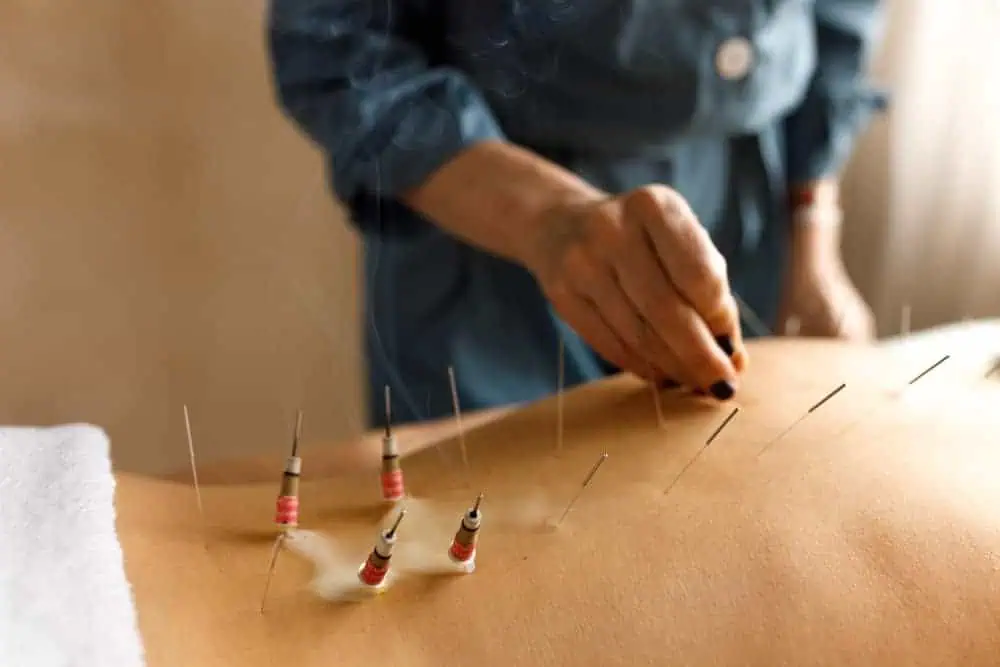
A lot of people picture something uncomfortable when they hear “needles on your face.” The reality is quite different from what most people expect.
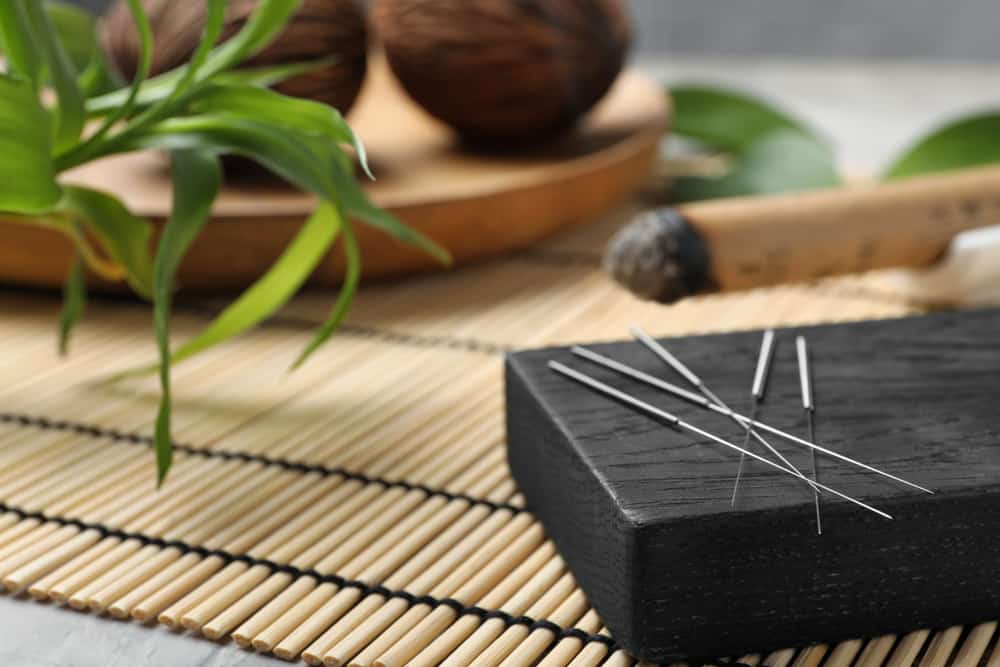
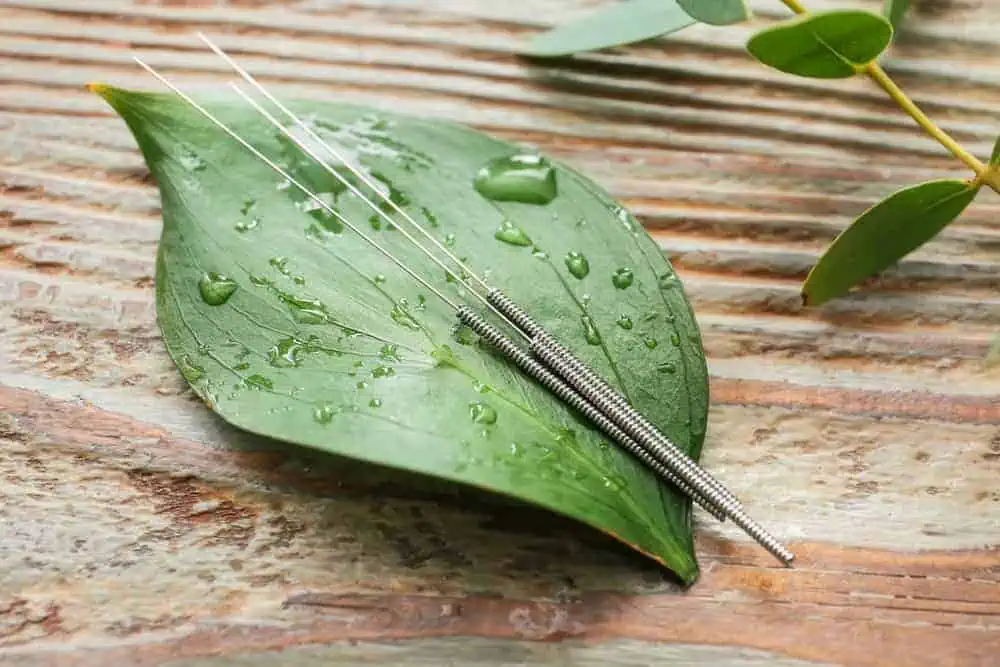
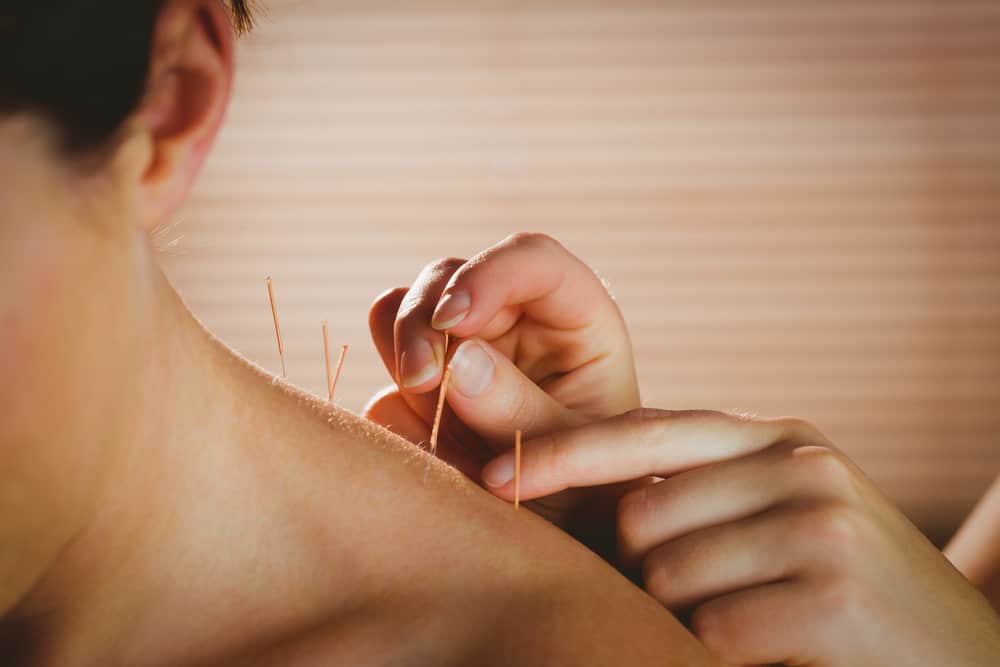
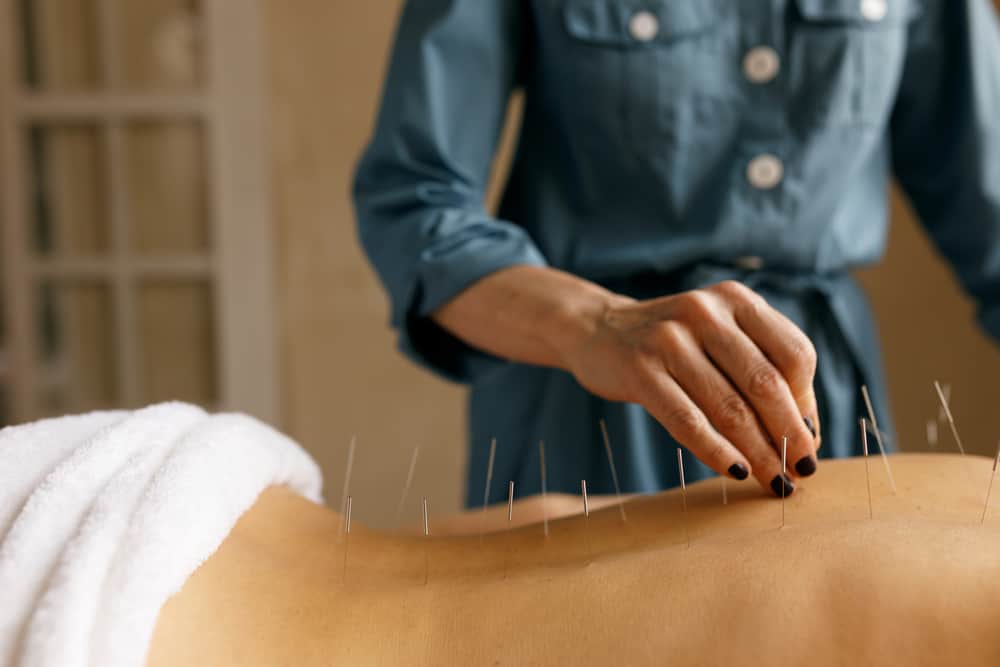
During a typical session, 40 to 70 ultra-fine needles are placed on the face and at specific body acupoints. These needles are significantly thinner than the kind used for injections — most patients describe the sensation as a light tap or mild tingling, not pain. The needles stay in place for around 20 to 30 minutes while you rest. Most people find the experience genuinely relaxing, which isn’t incidental — the parasympathetic state your body enters during treatment is part of why it works.
A full treatment course is typically 10 to 12 sessions. Most patients notice a visible improvement in skin brightness and tone within the first three sessions. The structural changes — reduced fine lines, improved firmness, lifted appearance — become more apparent after six or more sessions. Results from a complete course can last six to twelve months with monthly maintenance, and the collagen remodeling that happens during treatment continues building even after sessions end.
Side effects are minimal. Some patients experience light bruising at needle sites, which typically resolves within a day or two. There’s no downtime, no recovery period, and nothing that requires you to clear your schedule. You can go about your day immediately after a session.
One thing worth knowing: the first appointment isn’t just needles. It’s a full health consultation. We assess your skin, your overall health, your stress levels, your digestion, your sleep — all the internal factors that show up on your face over time. That intake shapes everything that follows.
Facial Acupuncture vs. Botox: What Nassau County Residents Are Actually Weighing
Nassau County residents considering facial acupuncture have usually already thought about Botox — or tried it. So it’s worth being direct about the comparison rather than dancing around it.
Botox works by temporarily paralyzing the muscles responsible for expression lines. It’s fast, it’s predictable, and it lasts three to six months. After that, it’s gone, and you’re back to where you started unless you book another appointment. A single session averages around $472, which means maintaining results costs roughly $944 to $1,888 per year — indefinitely.
Facial acupuncture works differently at every level. It doesn’t paralyze anything. It builds. A full course of 10 to 12 sessions typically costs $600 to $1,000 total, and the results — rooted in actual collagen remodeling — can last six to twelve months with monthly maintenance. You still look like yourself. The improvement is gradual and natural, which is exactly what most people are looking for when they say they don’t want to look “done.”
Who Is a Good Candidate for Facial Acupuncture?
Facial acupuncture tends to work best for adults in their late thirties through sixties who are starting to notice fine lines, loss of firmness, or uneven skin tone and want to address it without injectables or surgery. It’s particularly well-suited for people who’ve already invested in skincare and want something that works at a deeper level.
It’s also a strong option for anyone who’s tried Botox and didn’t love the result — either the look, the maintenance cycle, or the cost. And for people who are simply opposed to injectables on principle, it offers a clinically supported alternative that doesn’t require you to compromise.
That said, facial acupuncture isn’t a one-size-fits-all treatment. The results you get depend heavily on your overall health, your skin’s baseline condition, and how consistently you complete the treatment course. Someone who’s managing high stress, poor sleep, and a diet that’s driving inflammation is going to see slower results than someone whose internal health supports the process. That’s why a thorough intake consultation matters so much — and why we spend real time understanding your full picture before recommending a plan.
If you’re pregnant, have a bleeding disorder, or are on certain blood thinners, facial acupuncture may not be appropriate, and we’ll identify that during the consultation before any treatment begins.
Frequently Asked Questions from Nassau County Patients
**How many sessions will I need before I see results?**
Most patients notice a visible difference in skin tone and brightness within the first two to three sessions. The more structural changes — reduction in fine lines, improved firmness, a lifted quality to the skin — typically become apparent after six or more sessions. A full course is 10 to 12 sessions, usually twice weekly for the first two weeks and then weekly after that. If you’re in Massapequa, Merrick, Bellmore, or anywhere else across Nassau County, our Huntington Station location is accessible enough that maintaining that schedule isn’t the obstacle most people expect it to be.
**Is facial acupuncture covered by insurance?**
Cosmetic acupuncture specifically isn’t typically covered by insurance. However, we accept NYSHIP, United Healthcare, Aetna, and Empire BCBS for acupuncture treatment broadly — which is uncommon in this space and worth discussing during your consultation. Many Nassau County patients are surprised to find that related conditions addressed during sessions, such as stress, jaw tension, or facial pain, may qualify for coverage under their existing plan. The free consultation is the right place to sort that out before you commit to anything.
**Will it hurt?**
The needles used for facial acupuncture are much finer than injection needles. Most patients describe the sensation as a light tap or mild tingling at the needle site — not pain. On the face specifically, the experience is typically described as subtle and relaxing rather than uncomfortable. Bruising is possible but uncommon and resolves quickly. There’s no downtime after a session.
**Can I keep using my regular skincare products?**
Yes. Facial acupuncture doesn’t interfere with your existing skincare routine. In fact, the increased circulation and collagen activity that follow a session can make your products more effective. If you’re using retinol or active exfoliants, we may suggest timing adjustments around sessions, but this is a minor consideration, not a restriction.
**What makes this different from what I’d get at a med spa?**
The core difference is the diagnostic framework. We don’t just place needles in wrinkle lines — we assess your whole system and build a treatment plan around what’s actually driving the visible aging you’re experiencing. That can also include herbal medicine formulas that support skin health from within, dietary guidance to reduce inflammation, and lifestyle recommendations that work alongside the sessions. A med spa can’t offer that, and most don’t try.
Ready to Try Facial Acupuncture for Wrinkles in Nassau County?
Facial acupuncture for wrinkles is one of the few anti-aging approaches that’s supported by clinical research, works with your body rather than against it, and produces results that build over time instead of fading on a fixed schedule. That combination is harder to find than it should be.
If you’re in Nassau County — whether you’re in Valley Stream, Lynbrook, Oceanside, Mineola, or anywhere in between — and you’ve been weighing your options, the most useful next step is a real conversation with someone who can look at your specific situation and tell you honestly what to expect.
We offer a free consultation for new patients. No pressure, no commitment — just a chance to ask your questions, understand the process, and decide whether it makes sense for you. Call 516.509.5444 to get started.