
Summary:
How Stress and Cortisol Actually Affect Your Fertility
Stress isn’t just a feeling. It’s a physiological response that triggers your hypothalamic-pituitary-adrenal axis, releasing cortisol into your bloodstream. In short bursts, that’s helpful. It gets you through tough moments.
But when stress is constant—when you’re stuck in traffic, worried about work, and anxious about getting pregnant all at once—cortisol stays elevated. And that’s where fertility problems begin. Research shows that women with the highest stress biomarkers have twice the risk of infertility compared to those with lower levels.
Elevated cortisol disrupts the delicate hormonal balance your reproductive system depends on. It can delay or prevent ovulation, reduce the quality of your eggs, and even thin the uterine lining that an embryo needs to implant successfully.
Why Long Island's Lifestyle Creates a Perfect Storm for Fertility Stress
Suffolk County isn’t just any location. It’s part of a region where over 1.4 million people commute to New York City every single day. Average commute times hover around 90 minutes each way. That’s three hours a day spent in cars or on the LIRR, often dealing with delays, traffic, and the mental load of getting to and from work.
Research is clear on this: commutes longer than 30 minutes are linked to higher rates of depression, anxiety, and physical health problems. One study found that 33% of long-distance commuters suffer from depression, while 46% report obesity. The emotional and physical toll adds up quickly.
When you layer fertility struggles on top of that daily grind, the stress compounds. You’re not just dealing with work pressure or traffic. You’re also managing the emotional weight of trying to conceive, the uncertainty of whether treatments will work, and the isolation that often comes with infertility. Studies show that women with an infertility diagnosis experience stress levels equivalent to those diagnosed with breast cancer.
That kind of chronic stress keeps your body in a state of heightened alert. Your sympathetic nervous system—the “fight or flight” mode—stays activated when it should be resting. Meanwhile, your parasympathetic nervous system, which handles digestion, recovery, and reproduction, gets sidelined. Your body essentially decides that now isn’t a safe time to conceive.
This is where Suffolk County patients are finding real relief through acupuncture. It’s not about ignoring the stressors in your life. It’s about giving your nervous system a way to reset so your body can prioritize fertility again.
What Happens When Cortisol Levels Stay Elevated

Cortisol doesn’t just make you feel stressed. It actively interferes with the reproductive hormones your body needs to conceive. When cortisol remains high, it can suppress the release of gonadotropin-releasing hormone, which signals your pituitary gland to produce follicle-stimulating hormone and luteinizing hormone. Without those, ovulation doesn’t happen on schedule—or at all.
The impact goes beyond ovulation. High cortisol can reduce progesterone, the hormone that helps maintain the uterine lining after conception. It can also affect estrogen levels, making it harder for your body to build a thick, receptive endometrium. Research has found that women with elevated cortisol levels have thinner endometrial linings, which reduces the chances of successful implantation.
For women undergoing IVF, the stakes are even higher. One study found that women with cortisol levels above 22.25 μg/dL had significantly lower pregnancy rates—around 8 to 10%—and required more IVF cycles to achieve success. The stress of fertility treatments themselves can create a feedback loop, where anxiety about the process raises cortisol, which then reduces the likelihood of success.
It’s not just women who are affected. Men experiencing chronic stress show reduced sperm quality, lower testosterone, and decreased libido. Stress impacts both partners, which is why addressing it becomes essential for couples trying to conceive.
The key takeaway here is that cortisol isn’t a minor player. It’s a central factor in reproductive health, and when it’s out of balance, your fertility suffers. That’s why so many patients in Suffolk County, NY are turning to acupuncture as a way to bring cortisol back down and create the hormonal environment needed for conception.
How Acupuncture Regulates Your Nervous System and Lowers Cortisol
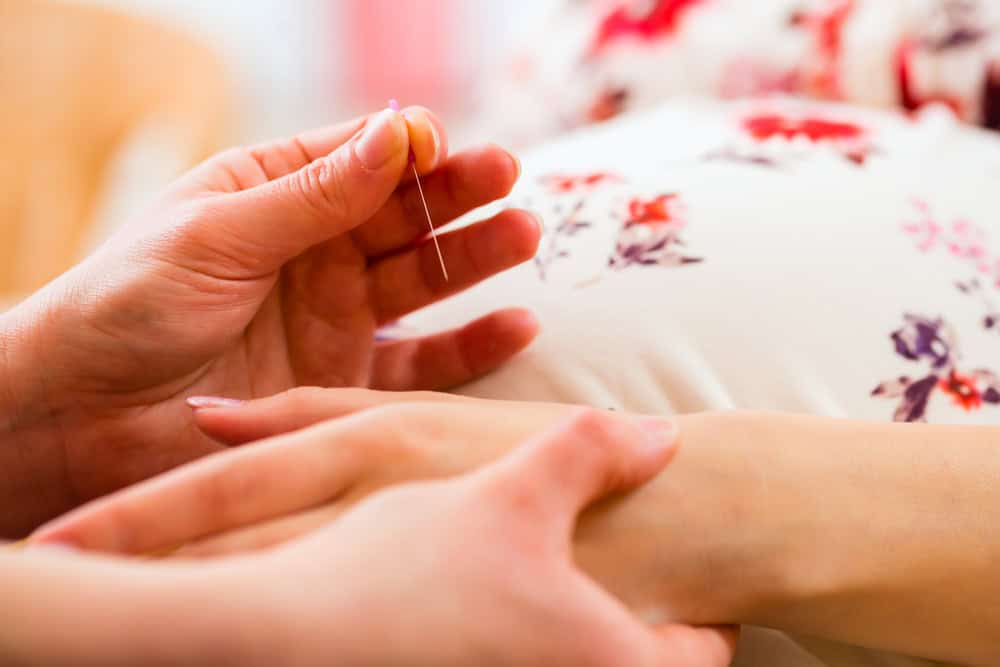
Acupuncture works by stimulating specific points on your body that connect to your nervous system. When we insert a needle at one of these points, it sends signals through sensory nerve fibers to your spinal cord and brain. That’s where the real work happens.
Research shows that acupuncture activates the parasympathetic nervous system—the part of your body responsible for rest, digestion, and reproduction. At the same time, it reduces activity in the sympathetic nervous system, which keeps you in a state of stress. This shift is measurable. Studies using heart rate variability have confirmed that acupuncture increases parasympathetic tone and decreases the body’s stress response in real time.
When your nervous system rebalances, cortisol levels drop. One study found that acupuncture reduced cortisol by up to 30% in patients receiving treatment compared to those who didn’t. Another study showed that acupuncture normalized the cortisol awakening response, indicating that patients were in a lower state of stress overall.
The Role of the HPA Axis in Fertility and How Acupuncture Helps
Your hypothalamic-pituitary-adrenal axis is the system that controls cortisol production. When you’re stressed, your hypothalamus releases corticotropin-releasing hormone, which signals your pituitary gland to release adrenocorticotropic hormone. That, in turn, tells your adrenal glands to pump out cortisol.
In a healthy system, this response is temporary. Cortisol levels rise to meet the challenge, then fall back to baseline once the stressor passes. But with chronic stress, the HPA axis gets stuck in overdrive. Cortisol stays elevated, and your body never gets the signal to relax.
Acupuncture has been shown to regulate HPA axis activity. It improves the performance of adrenocorticotropic hormone and helps control cortisol secretion. Research indicates that acupuncture modulates neurotransmitters in the brain regions responsible for stress response, including the hypothalamus, prefrontal cortex, and limbic system.
What does that mean for fertility? When the HPA axis is functioning properly, your reproductive hormones can do their job. Ovulation happens on schedule. Progesterone rises to support the uterine lining. Estrogen levels stay balanced. Your body shifts from a state of survival to one where reproduction becomes possible again.
This is especially important for women undergoing IVF. Studies show that acupuncture performed before and after embryo transfer significantly improves pregnancy rates. One randomized controlled trial found that women who received acupuncture had higher rates of clinical pregnancy, ongoing pregnancy, and live birth compared to those who didn’t. The researchers attributed this to acupuncture’s ability to reduce anxiety and improve blood flow to the uterus.
For patients in Suffolk County, NY, where stress from commuting and work is a constant factor, acupuncture offers a way to counteract that daily strain. It’s not about eliminating stress entirely—that’s not realistic. It’s about giving your body the tools to manage it so fertility isn’t compromised.

Why Nervous System Regulation Matters More Than You Think
Your nervous system doesn’t just respond to stress. It also determines whether your body feels safe enough to conceive. When your sympathetic nervous system is dominant, your body interprets that as a signal that conditions aren’t ideal for pregnancy. Resources get redirected toward survival, not reproduction.
Acupuncture helps shift that balance. By activating the vagus nerve and increasing parasympathetic activity, it signals to your body that it’s safe to rest, digest, and reproduce. This isn’t just theory. Multiple studies have confirmed that acupuncture increases heart rate variability, a key marker of parasympathetic activity, and reduces the physical stress index in real time.
The effects are cumulative. After a few sessions, patients often report feeling calmer, sleeping better, and noticing more regular menstrual cycles. That’s because their nervous system is no longer stuck in fight-or-flight mode. It’s found a new baseline—one that supports fertility instead of hindering it.
For women dealing with conditions like polycystic ovary syndrome or endometriosis, nervous system regulation can make a tangible difference. These conditions are often linked to stress and inflammation, both of which acupuncture helps address. By calming the nervous system and reducing cortisol, acupuncture creates an internal environment where hormones can rebalance and reproductive function can improve.
Men benefit too. Acupuncture has been shown to improve sperm quality, increase testosterone, and reduce the physical effects of chronic stress. For couples trying to conceive, addressing nervous system dysregulation in both partners can improve outcomes significantly.
The bottom line is this: your nervous system is the control center for your body’s stress response. When it’s out of balance, fertility suffers. Acupuncture offers a way to reset that system, lower cortisol, and create the conditions your body needs to conceive. For Suffolk County, NY patients navigating the stress of Long Island life, that kind of support can make all the difference.
Finding Fertility Support Through Acupuncture in Suffolk County, NY
Stress doesn’t have to control your fertility journey. When you understand how cortisol and nervous system dysregulation impact conception, you can take steps to address it. Acupuncture offers a research-backed, holistic approach that works with your body’s natural systems to reduce stress, balance hormones, and support reproductive health.
Whether you’re trying to conceive naturally or undergoing IVF, acupuncture can complement your efforts by regulating the stress response that Long Island’s demanding lifestyle creates. It’s not about adding one more thing to your to-do list. It’s about giving your body the support it needs to shift out of survival mode and into a state where conception becomes possible.
If you’re in Suffolk County, NY and dealing with the dual challenges of fertility and chronic stress, we offer personalized treatment plans that address your unique needs. We understand the connection between stress, cortisol, and conception—and we’re here to help you find balance.