Summary:
If you’ve been managing pain with ibuprofen for longer than you’d like to admit — or you’ve tried a turmeric supplement and wondered why nothing changed — you’re not alone. Most people dealing with chronic pain eventually hit a wall with conventional options. The side effects stack up, the relief gets shorter, and the underlying problem never actually goes away.
Natural pain relief isn’t a new idea. It’s been the foundation of medicine across cultures for thousands of years. What’s newer is the science that explains why it works. This page walks you through the most effective options, starting with the herbs that have the strongest track record — and ending with what actually makes a treatment plan stick.
Strongest Herbal Pain Killers Used in Traditional Chinese Medicine
When people think of herbal pain relief, they usually picture turmeric capsules from the drugstore shelf. That’s a reasonable starting point, but it’s a long way from what Traditional Chinese Medicine actually has to offer. The TCM pharmacopoeia includes herbs with measurable, documented analgesic effects — some of them acting on the same receptor systems as pharmaceutical painkillers, but with a very different safety profile over time.
The herbs that consistently appear in clinical research and classical TCM formulas for pain aren’t household names yet in the West. But they should be. Understanding what they are and how they work is the first step toward knowing whether a natural approach might be right for your situation.
Natural Pain Killer Herbs With Real Research Behind Them
Corydalis — known in TCM as yan hu suo — is widely regarded as the most potent analgesic herb in the Chinese pharmacopoeia. A 2014 study identified a compound in corydalis called dehydrocorybulbine, or DHCB, which was shown to reduce both inflammatory pain and injury-induced neuropathic pain. What makes this particularly interesting is that DHCB acts on dopamine receptors in addition to opioid receptors. That dual mechanism produces meaningful pain relief with significantly less addiction risk than conventional opioid medications. For people trying to step down from prescription pain management, that distinction matters enormously.
Frankincense — ru xiang in Chinese medicine — has been used for joint pain and inflammation for centuries, and modern pharmacology has started to explain why. The active compounds in frankincense inhibit an enzyme called 5-LOX, which plays a central role in the inflammatory cascade. This is the same pathway targeted by some pharmaceutical anti-inflammatory drugs, just with a considerably gentler effect on the GI tract and cardiovascular system over long-term use. Myrrh, its frequent companion in TCM formulas, works alongside frankincense to move what TCM calls Blood stagnation — a concept that maps roughly onto the idea of localized congestion, poor circulation, and the kind of fixed, stabbing pain that doesn’t move around.
White willow bark is another herb worth knowing. It contains salicin, which converts to salicylic acid in the body — the same active compound as aspirin. People have been using willow bark for pain since ancient Egypt, long before anyone understood the chemistry. Turmeric and ginger round out the list of well-researched natural anti-inflammatories, both inhibiting COX-2 and other inflammatory pathways that pharmaceutical NSAIDs also target. The difference is that these herbs, used correctly, don’t carry the same long-term risks of GI bleeding or kidney stress that come with regular NSAID use.
The important qualifier in all of this is “used correctly.” These aren’t compounds you want to self-prescribe in random doses from the supplement aisle. The research that supports them is based on specific preparations, specific dosages, and specific clinical contexts — which is exactly where a trained TCM herbalist comes in.
Herbal Remedies for Body Pain: Why One Herb Rarely Does the Job Alone
One of the most common things we hear from new patients is some version of: “I tried turmeric for months and it didn’t really do anything.” That experience is frustrating, and it’s also completely understandable given how herbal supplements are marketed. The message is usually “take this one thing and feel better.” That’s not how herbal medicine for body pain actually works — at least not in the TCM tradition.
In Traditional Chinese Medicine, widespread body pain isn’t treated as a single condition with a single remedy. It’s a pattern. The pattern might involve what TCM calls Wind-Damp obstruction — the kind of aching, heavy pain that gets worse in cold or damp weather, which a lot of people in Nassau County know well after a rough winter. Or it might reflect Qi and Blood deficiency, where the body simply isn’t generating enough nourishment to keep tissues healthy and pain-free. Or it could be Kidney deficiency, which in TCM is associated with deep, chronic pain that tends to worsen with fatigue. Each of these patterns calls for a different herbal formula.
This is what separates a professionally customized herbal formula from a bottle of turmeric capsules. We don’t just pick one anti-inflammatory herb and hope for the best. We conduct a thorough intake — looking at where your pain is located, what makes it better or worse, how your sleep is, your digestion, your energy levels, even the quality of your pulse — and then we build a formula that addresses the whole picture. The formula might include six, eight, or ten herbs working together, each one playing a specific role in the overall strategy.
The synergy between herbs in a classical formula is one of the things that makes TCM herbal medicine genuinely different from supplement shopping. Corydalis might be the lead analgesic, but it’s often combined with herbs that support circulation, reduce inflammation, tonify the underlying deficiency, and protect the digestive system from any harsh effects. That kind of precision doesn’t come from a label on a shelf. It comes from clinical training — the kind that requires over 2,000 hours of specialized education just to earn national board certification in Chinese Herbology.
How Acupuncture and Herbal Medicine Work Together as a Natural Pain Relief System
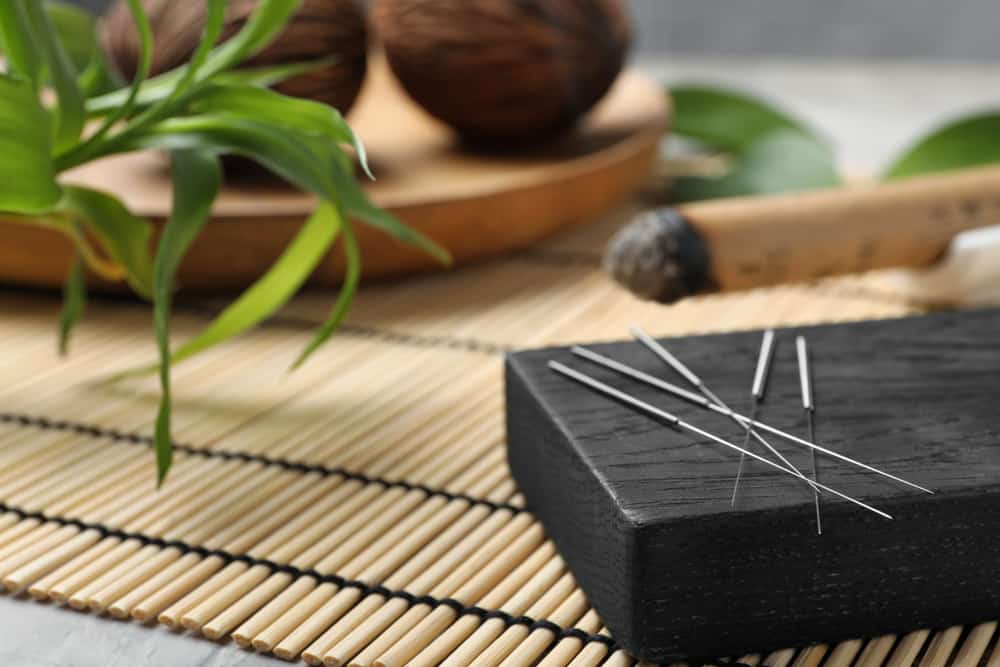
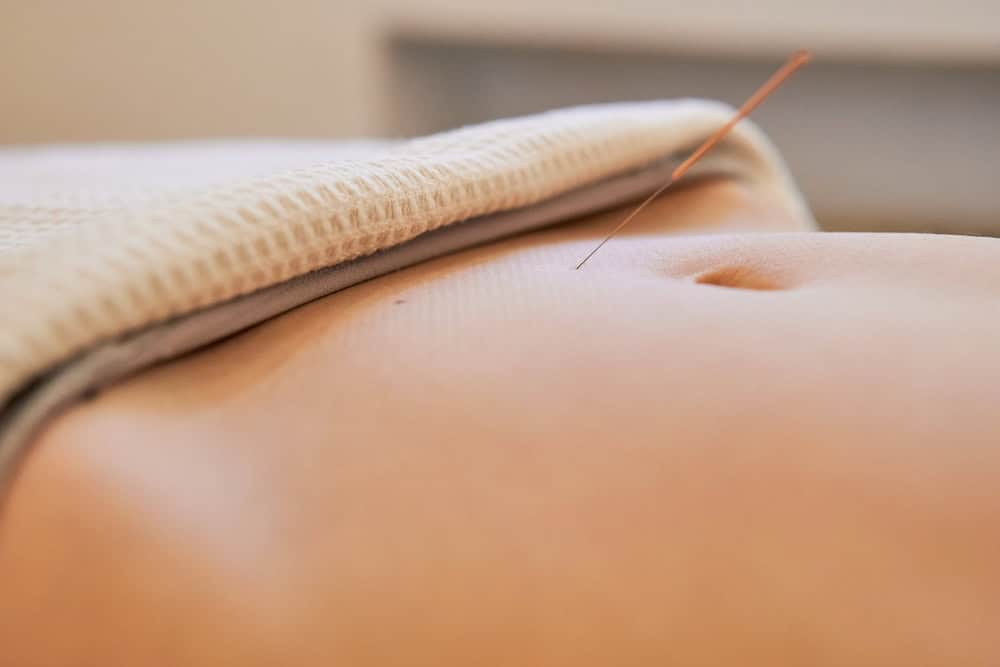
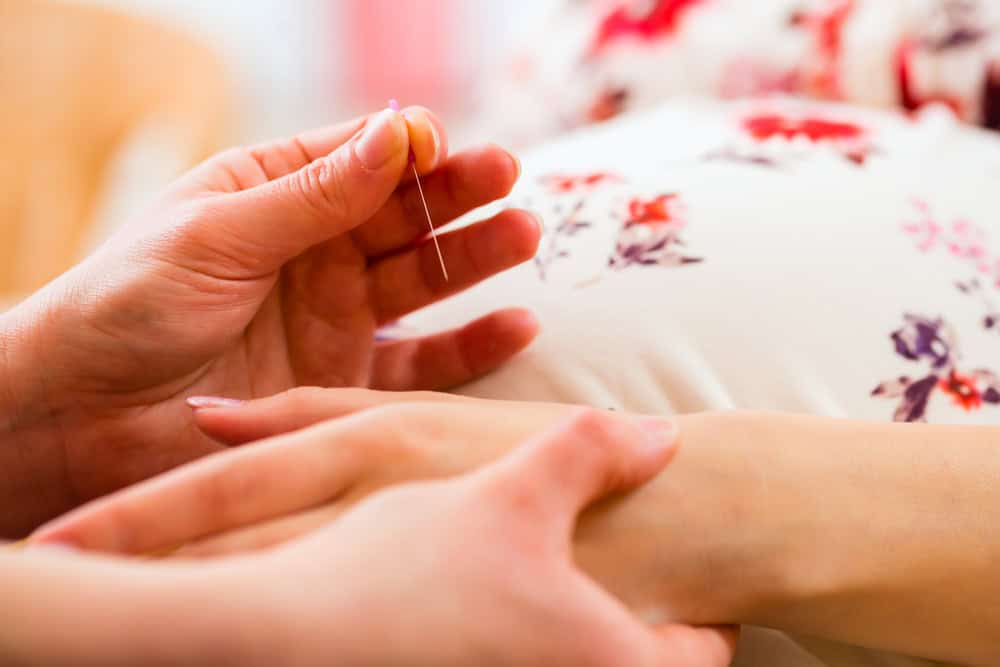
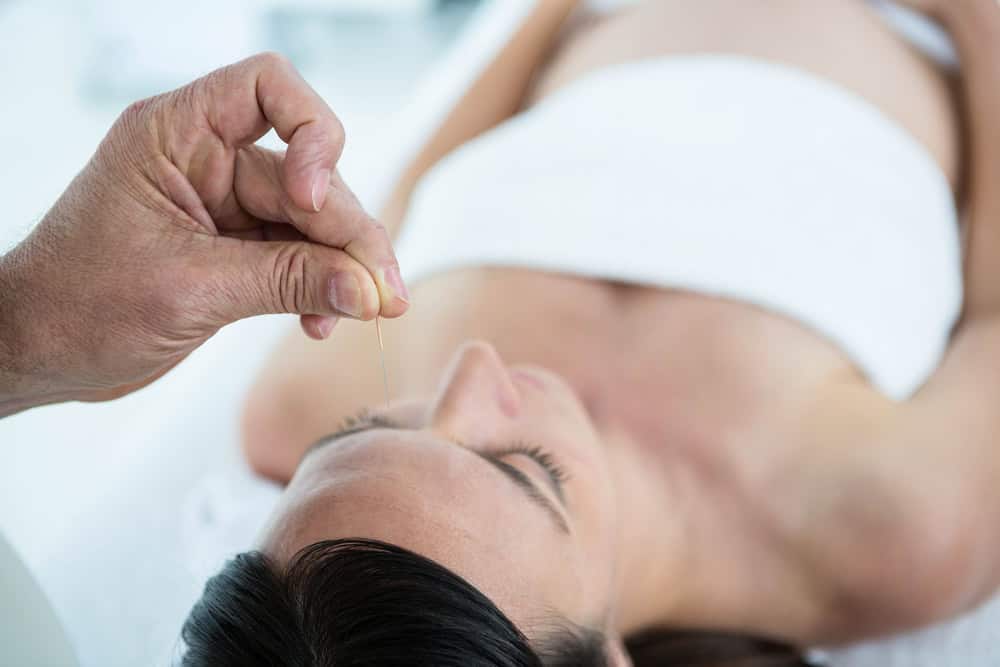
Acupuncture and herbal medicine aren’t two separate offerings that happen to coexist in the same clinic. In Traditional Chinese Medicine, they’re designed to work together. Acupuncture stimulates specific points along the body’s meridian pathways, triggering the release of endorphins and other endogenous pain-relieving compounds. It addresses the immediate pattern — unblocking stagnation, reducing inflammation, calming an overactive nervous system. Herbal medicine sustains and deepens that work between sessions, continuing to shift the underlying pattern when you’re not on the table.
The combination consistently produces better outcomes than either approach alone. It’s also the approach that requires the highest level of training to deliver safely and effectively — which is why the credentials of your practitioner matter more than most people realize.
What Nassau County Patients Should Know Before Choosing a Natural Pain Approach
Nassau County has a specific pain profile that’s worth naming. A significant portion of the county’s residents commute into Manhattan daily on the Long Island Rail Road — often 60 to 90 minutes each way, sitting in cramped seats, carrying bags, and staring at a phone or laptop. That routine creates predictable patterns of neck tension, lower back stiffness, and shoulder pain that accumulates over years. Add in the amount of time spent in a car on the LIE or the Northern State Parkway, and you’ve got a population that is dealing with chronic postural strain as a baseline condition — before any injury or acute episode even enters the picture.
Then there’s the active side of Nassau County life. Golfers, tennis players, recreational cyclists, youth sports parents who play alongside their kids on weekends — overuse injuries and repetitive strain are common, and they don’t always respond well to the standard “rest and ibuprofen” advice. People want to stay active. They want a solution that addresses why the shoulder keeps flaring up, not just something to get them through the next week.
We also see a lot of patients who are navigating Workers’ Compensation or No-Fault insurance situations after motor vehicle accidents — which are a reality in a county with Nassau’s traffic density. Both are accepted here, which removes a financial barrier that stops a lot of people from exploring natural pain management even when they’re genuinely interested.
What all of these patients have in common is that they’ve usually already tried the obvious things. They’ve done physical therapy, they’ve taken the anti-inflammatories, some have had injections. They come in not because they’re curious about Eastern medicine as a concept, but because they’re still in pain and they want something that actually gets to the root of it. That’s exactly the kind of case where a combined acupuncture and herbal medicine approach tends to produce the most meaningful results.

Frequently Asked Questions About Natural Pain Relief
**Does acupuncture actually work for pain, or is it just placebo?**
This is probably the most common question we get, and it’s a fair one. The short answer is that the research has largely settled this debate. The World Health Organization and the National Institutes of Health both recognize acupuncture as effective for a range of pain conditions, including low-back pain, neck pain, and osteoarthritis. A systematic review of 13 randomized controlled trials found that acupuncture produced greater pain relief within 30 minutes than either sham treatment or analgesic injections. Neuroimaging studies have confirmed that acupuncture produces measurable changes in brain activity — it’s not a matter of belief. You don’t need to subscribe to any particular philosophy for the physiological effects to happen.
**How many sessions will I need before I notice a difference?**
It varies by condition and by how long the pain has been present. Acute pain that developed recently tends to respond faster than something that’s been building for years. Many patients in Nassau County notice a meaningful shift within the first few sessions — sometimes after just one or two. We set realistic expectations during the initial evaluation, which is free, so there’s no financial commitment required to get a clear picture of what a treatment plan would look like for your specific situation.
**Is herbal medicine safe to take alongside my current prescriptions?**
This is an important question, and one that should always be answered by a qualified practitioner — not a supplement label. Some herbs do interact with medications, which is precisely why self-prescribing from a health food store carries real risks. When herbal medicine is prescribed by a nationally board-certified TCM herbalist who knows your full health history and current medications, those interactions can be assessed and avoided. For Nassau County patients who are already working with a primary care physician or specialist, we’re comfortable collaborating directly with your existing medical team to make sure everything is coordinated safely.
**Why didn’t the turmeric I bought at the pharmacy do anything?**
Because a single herb at a standard commercial dose isn’t a treatment plan. Turmeric has legitimate anti-inflammatory properties — the research on curcumin is real. But its effectiveness depends heavily on formulation, dosage, bioavailability, and whether it’s actually the right herb for your specific pain pattern in the first place. A professionally constructed TCM formula addresses all of those variables. It’s the difference between taking a random antibiotic and taking the one that’s actually matched to your infection.
**Does insurance cover acupuncture?**
More often than people expect. We accept NYSHIP, United Healthcare, Aetna, Empire BCBS, New York State No-Fault insurance, and Workers’ Compensation. If you’re unsure whether your plan covers acupuncture, the best first step is to call us directly — we can help you figure that out before you commit to anything.
Finding the Best Natural Pain Relief That Actually Lasts
The most effective natural pain relief isn’t a single herb or a single technique. It’s a treatment approach that identifies what’s actually driving your pain and addresses it systematically — with tools that have both thousands of years of clinical use and a growing body of modern scientific validation behind them.
If you’re in Nassau County and you’ve been living with pain that hasn’t responded to the usual approaches, it’s worth having a real conversation about what else is possible. Not a sales pitch — an actual evaluation of your situation, your history, and what a personalized plan might look like.
We offer a free initial consultation for exactly that reason. No commitment, no pressure — just a chance to get a clearer picture of your options from practitioners who hold the highest level of New York State licensure and national board certification in both acupuncture and Chinese Herbology. Reach out at 516.289.9507 to get started.