Summary:
September has a way of resetting everything. School schedules kick back in, the beach crowds thin out, and for a lot of couples in Nassau County, the mental shift from “we’re still trying” to “we need a plan” happens right around now. If you’ve been thinking about adding acupuncture to your fertility protocol — or your RE has mentioned it and you’ve been putting it off — fall is not just a convenient time to start. It’s the biologically strategic time to start. Here’s why that matters, and what the research actually says about acupuncture and fertility outcomes.
Acupuncture for Infertility Treatment: What the Research Actually Shows
The evidence on acupuncture for infertility treatment has gotten meaningfully stronger in the last few years. A 2023 meta-analysis published in the Archives of Gynecology and Obstetrics reviewed 25 high-quality randomized controlled trials involving more than 4,700 participants and found that women who received acupuncture during IVF had a live birth rate of 38.0%, compared with 28.7% for those who did not. That’s not a small difference.
Clinical pregnancy rates followed a similar pattern — 43.6% in the acupuncture group versus 33.2% in the control group. What the research also shows is that more treatments, started earlier, tend to produce better outcomes than a single session on the day of embryo transfer. Timing and dosage both matter. This isn’t acupuncture as a last-minute add-on — it’s acupuncture as a deliberate, protocol-driven part of your fertility care.
Acupuncture to Get Pregnant: How Does It Actually Work?
One of the most common questions we hear is some version of: “I get that it might help, but what is it actually doing?” It’s a fair question, and the honest answer is that acupuncture influences fertility through several overlapping mechanisms — not one single magic pathway.
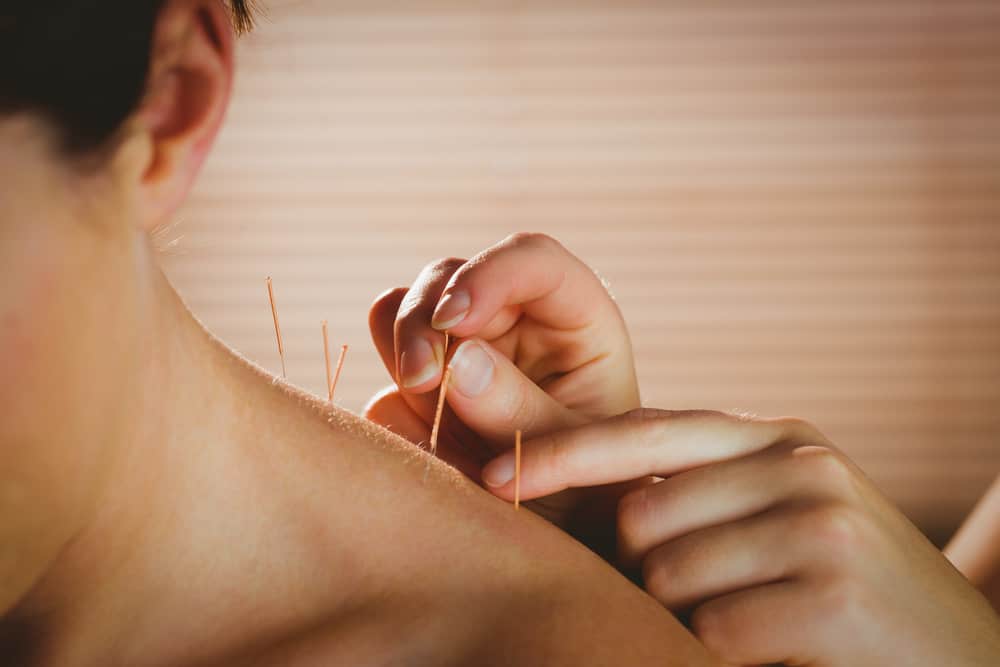
When acupuncture needles are placed at specific points, the body releases endorphins, muscles relax, and the nervous system shifts out of a stress response. For someone going through IVF — with monitoring appointments, injections, and the emotional weight of every cycle — that shift matters. Research links elevated cortisol and chronic stress to lower IVF success rates, and acupuncture has measurable effects on both.
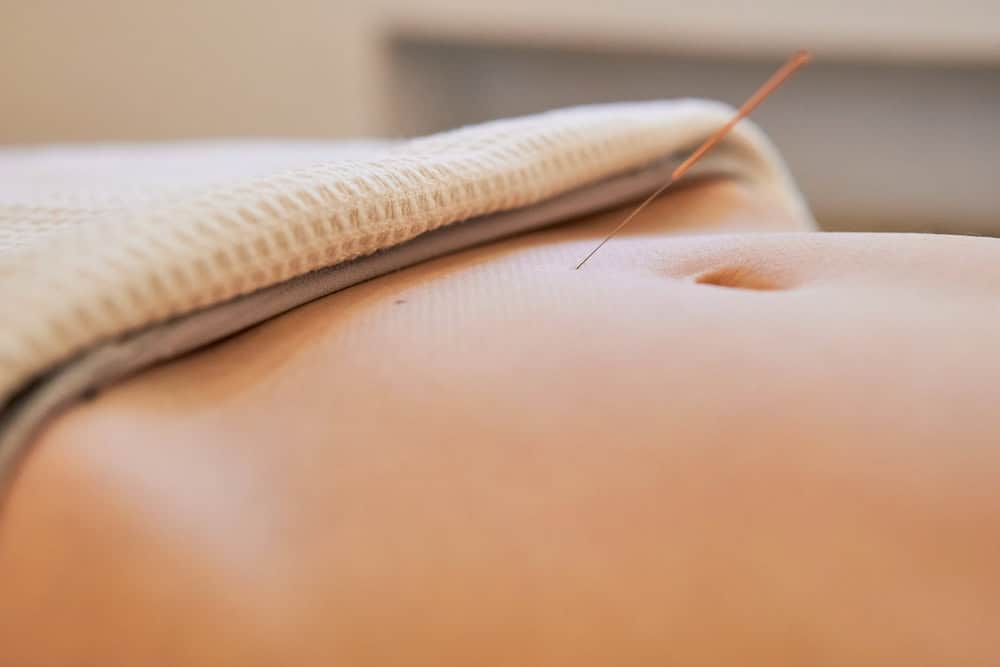
Beyond stress, acupuncture is thought to improve blood flow to the uterus and ovaries, support hormonal regulation, and enhance endometrial receptivity — the uterine lining’s readiness to receive an embryo. These aren’t abstract claims. They’re the mechanisms that explain why the clinical data looks the way it does.
What also matters is that acupuncture, when it’s done well, is personalized. We use traditional diagnostic methods — including tongue and pulse assessment — to identify the specific imbalances affecting your reproductive health. Two people with the same diagnosis from their RE may have very different TCM patterns driving their fertility challenges, and the treatment plan should reflect that. One person might present with what Chinese medicine calls Kidney deficiency; another with Liver Qi stagnation or Blood deficiency.
The acupuncture points, herbal formulas, and lifestyle guidance we recommend are built around your specific pattern — not a generic fertility protocol applied to everyone who walks through the door. This is also why the whole-systems approach tends to outperform acupuncture alone. Research on women receiving Whole Systems Traditional Chinese Medicine — combining acupuncture, herbal medicine, dietary guidance, and lifestyle support — found a live birth rate of 61.3%, compared with 48.2% in an IVF-only group. That’s a substantial gap, and it reflects what we see in practice: the more comprehensively you support the body, the better the conditions for conception.
Why Fall Is the Right Time to Start — The 90-Day Egg Quality Window

Here’s the piece that most people don’t know, and that most fertility content doesn’t explain clearly enough: eggs take approximately 90 days to mature before they’re retrieved in an IVF cycle. That process — called oogenesis — means the quality of the eggs retrieved in January or February is directly influenced by what’s happening in your body right now, in October and November.
Starting acupuncture in the fall isn’t just convenient because your schedule opens up after summer. It’s strategically timed to influence the very eggs that will be retrieved in your winter cycle. If you’re planning a fresh IVF cycle or a frozen embryo transfer in early 2025, the prep window that matters most is already open.
This is especially relevant for couples who went through a failed cycle earlier this year. The physical and emotional recovery from a failed fresh cycle typically takes two to three months — which lands most people squarely in the fall. If that’s where you are right now, you’re not behind. You’re actually at the exact right moment to begin a focused, 90-day acupuncture protocol before your next transfer.
There’s also a seasonal dimension to this that Chinese medicine has recognized for a long time. In TCM, fall is associated with preparation and reflection — a time to build reserves before winter. Winter, governed by the Kidney meridian, is when the body’s deepest energy stores are most active. The Kidneys in TCM are considered the root of reproductive energy, storing what’s called Jing, or essence — the foundational resource that conception draws on. Beginning acupuncture in fall, as the body naturally shifts toward restoration, aligns the treatment with the season rather than working against it.
For Nassau County residents specifically, fall carries its own particular weight. Summer on the South Shore — weekends at Long Beach, slower work rhythms, time away — gives way abruptly to the full intensity of the fall commute, packed schedules, and the pressure of NYC work life resuming at full speed. That seasonal stress spike is real, and it lands directly on the reproductive system. For couples already navigating the emotional demands of fertility treatment, fall acupuncture isn’t just biologically timed well. It’s also one of the most practical things you can do to keep your body from working against itself during the most important prep window of the year.
Chinese Medicine for Fertility: What a Full Treatment Plan Looks Like
Acupuncture often gets discussed as if it’s the whole story. It isn’t. Chinese medicine for fertility is a system — and the results tend to reflect how comprehensively it’s applied.
A fertility treatment plan typically begins with a detailed intake: your health history, your cycle patterns, your IVF protocol if you have one, and the specific challenges you’ve been dealing with. From there, we build a plan that may include regular acupuncture sessions timed to your cycle, personalized herbal medicine formulas, dietary guidance grounded in Eastern medicine principles, and ongoing lifestyle support. Everything is adjusted as your protocol evolves and your body responds.
How Acupuncture Works Alongside Your RE's IVF Protocol
One concern we hear fairly often is whether acupuncture will interfere with an IVF protocol — with medications, timing, or the RE’s specific instructions. The short answer is no, when it’s done by practitioners who understand both systems.
Our team includes practitioners with backgrounds in both Eastern and Western medicine. That means we can read your protocol, understand where you are in your cycle, and time acupuncture sessions to complement what your RE is doing — not compete with it. Many reproductive endocrinologists in Nassau County and across Long Island actively recommend acupuncture to their IVF patients. We work alongside that recommendation, not around it.
The Paulus protocol — a specific set of acupuncture points used on the day of embryo transfer — is one example of how Eastern and Western fertility care have developed a genuine working relationship. Research supports its use on transfer day, and it’s one of the tools we incorporate when the timing is right. But the more important work typically happens in the weeks and months before transfer, during the stimulation phase and the egg development window we described earlier. A single session on transfer day is better than nothing. A three-month protocol leading into transfer day is better than a single session.
For Nassau County patients who are already working with a reproductive endocrinologist, adding acupuncture doesn’t mean starting over or changing course. It means giving your body more support within the protocol you’re already following. We’re happy to communicate with your care team if that’s useful — that kind of coordination is part of what we do.

Common Questions About Fertility Acupuncture in Nassau County
**Does insurance cover acupuncture for fertility?**
It depends on your plan, but it’s worth checking before you assume it doesn’t. We accept many insurance plans — which is not the norm in the acupuncture world, where most practices are cash-only. Call us and we can help you figure out what your coverage looks like before you commit to anything. Nassau County residents often find that their employer plans cover at least a portion of acupuncture care, especially when it’s integrated with an IVF protocol.
**How many sessions do I actually need?**
Research consistently shows that more treatments, begun earlier, produce better outcomes than a handful of sessions close to transfer. For most fertility patients, we recommend starting at least two to three months before your planned IVF cycle — which, if you’re targeting a winter transfer, means starting now. The specific frequency depends on where you are in your cycle and your treatment plan, but weekly sessions during active IVF prep is a common starting point.
**Is it safe to do acupuncture during IVF stimulation?**
Yes. Acupuncture is safe during the stimulation phase of an IVF cycle when performed by a licensed, experienced practitioner who understands the protocol. Our practitioners are New York State licensed acupuncturists, nationally board certified in both acupuncture and Chinese herbology through the NCCAOM — the national credentialing body that sets the standard for the field.
**What if I’ve already had a failed cycle?**
Then you’re in the exact demographic this approach is designed for. Patients who have been through a failed IVF cycle and are preparing for another are often the most motivated — and the most likely to benefit from a full three-month prep protocol. The combination of acupuncture, herbal support, and lifestyle guidance gives your body a genuine reset before the next cycle begins. Nassau County patients going through this process have access to our Huntington Station location, and we offer evening and weekend appointments to work around monitoring schedules and commutes.
**Do I need a referral?**
No. You can reach out directly to schedule a consultation. If your RE has already recommended acupuncture, that’s a great starting point for a conversation about how to coordinate care.
When to Start Acupuncture for IVF — and What to Do Next
The answer to “when should I start?” is almost always sooner than you think. The 90-day egg quality window is real, the research on acupuncture and IVF outcomes is stronger than most people realize, and fall — right now — is the moment that lines up with both the biology and the season.
If you’re in Nassau County and planning a winter IVF cycle or frozen embryo transfer in early 2025, the prep window that matters most is already open. Starting now means your body has the time it needs to respond, build, and prepare — not just for the transfer, but for everything leading up to it.
We work with patients at every stage of the fertility journey — natural conception, IUI, IVF, and beyond. If you’re ready to talk through what a personalized plan might look like for you, reach out to us and let’s start the conversation.